Daewoo Washing Machine Repair in Kuwait:Common Faults & Home
Not every Daewoo washing machine fault has the same level of seriousness, and not every problem means that a component needs to be replaced immediately. Sometimes the issue begins with a drain hose, an unbalanced load, or a door-closing problem, while other cases involve an internal part that needs proper inspection. For this reason, Daewoo washing machine maintenance in Kuwait should begin by identifying the exact stage where the problem appears, whether the washer fills with water, whether the drum moves, and whether drainage and spinning happen normally. In this guide, we focus on the most common symptoms, explain which simple checks can be carried out safely, and clarify when it is better to stop using the appliance and book an in-home technician to diagnose the cause before any repair is started.
Daewoo Washing Machine Maintenance in Kuwait
Dealing with Daewoo washing machine maintenance in Kuwait should begin by understanding how the washer behaves when the problem appears instead of focusing only on which part might be faulty. A washing machine works through several connected stages that begin with receiving the start command, then filling with water, moving the drum, washing, rinsing, draining, and spinning. If one stage is not completed, the entire program may stop even though the rest of the appliance is still functioning normally.
If the washer fills with water normally and then stops before the drum moves, this is completely different from a machine that washes normally but leaves water inside afterward. The first case requires attention to the movement stage and the conditions needed for the program to begin, while the second directs inspection toward drainage. If the washer completes washing and drainage but refuses to spin, then load balance, drainage completion, and the conditions required to enter the spin stage should be reviewed.
It is also useful to know whether the problem happens with every program or only with one particular cycle. Sometimes the issue is connected to a stage used more heavily by specific programs. Any new noise, error code, or water leakage can also help narrow down the possible causes instead of inspecting every part of the appliance without a clear direction.
Proper maintenance should not depend on replacing one part after another until the machine works. The better approach is to eliminate external conditions first, such as electricity, water supply, hoses, and load balance, then inspect the components directly connected to the symptom.
From a cost perspective, an accurate price cannot be determined before the actual fault is identified. Cleaning a drainage path is different from repairing an internal component or fixing a water leak. Diagnosis should come first because it determines the real service scope.
• Knowing the last stage that completed normally gives a clearer diagnostic starting point than a general description such as saying that the washing machine is broken
• Recording whether the fault appears in every cycle or only with certain programs helps distinguish a consistent problem from a temporary operating condition
• Checking electricity water supply hoses and load conditions before opening the appliance reduces the chance of replacing working parts unnecessarily
• Identifying the real cause before agreeing to repair keeps the cost connected to the actual work required instead of assuming one general price for every fault
Daewoo Washing Machine Technician at Home
Using a Daewoo washing machine technician at home can be useful because many faults are influenced by the appliance installation itself. Water supply, drain-hose position, washer stability, and electrical connection can all affect performance, so inspecting the machine in its normal location gives a clearer picture than relying only on a phone description.
An organized technician should begin by asking questions before dismantling anything. When did the problem begin? Was the washing machine working normally before that? Was the appliance moved, was a hose changed, or was there a power interruption? Does water enter and drain? Does the problem appear at the beginning of the program or after some time? These simple details can eliminate many unnecessary possibilities.
If the issue involves drainage, the hose and external drainage position should be checked before internal components are considered. If there is strong vibration, washer stability and load distribution should be reviewed before assuming there is a mechanical fault. If there is leakage, the technician should identify exactly when the water appears because a leak during filling is different from a leak during drainage.
In-home inspection also makes it possible to test the washing machine after repair under the same conditions where the fault originally appeared. If the problem happened during spinning, the washer should be observed reaching the spin stage normally. If it did not drain, water should be confirmed to leave correctly.
The better technician is not the one who replaces the largest number of parts. The better technician is the one who can explain the cause, what was inspected, and why the suggested repair is connected to the actual problem.
• Inspecting the washing machine in its normal installation location can reveal water supply drainage and stability problems that may not be obvious when the appliance is considered separately from its environment
• Describing exactly when the fault appears helps the technician choose the correct diagnostic starting point instead of immediately opening unrelated parts
• Testing the machine after repair at the same stage where the original fault appeared provides a clearer result than simply switching the appliance on for a few seconds
• Asking for an explanation before any component is replaced helps keep the repair decision connected to actual inspection rather than guesswork
Repairing a Daewoo Top-Load Automatic Washing
Machine
Repairing a Daewoo top-load automatic washing machine requires understanding how this washer type operates because top-load problems can be related to the lid, load balance, water filling, drainage, and drum movement. A washer that stops during spinning, for example, does not automatically have a motor problem because the appliance may refuse to spin when water has not drained or when the laundry is distributed unevenly.
The first step is to determine whether the washer begins the program normally. Does it fill with water? Does the drum move? Does the lid close properly? Does the problem appear during washing, drainage, or spinning? Identifying this point matters because every stage depends on a different group of operating conditions.
Load distribution also plays a bigger role than many users expect. One heavy item or a large quantity of clothes collected on one side can cause the washer to attempt to redistribute the weight or stop before reaching full spin speed. Testing with a reasonable and balanced load can help determine whether the problem is connected to usage or the appliance itself.
The drain hose should also be considered. If water does not leave correctly, the washing machine may stop before spinning and the user may think the problem is related to drum movement when the real issue began with drainage.
The lid should never be forced and any system connected to lid detection should not be bypassed. If the washer does not recognize the lid correctly, the cause needs to be inspected rather than attempting to defeat a safety-related operating function.
If the same problem continues with different loads and different programs, professional inspection becomes more appropriate than repeatedly redistributing the laundry and hoping for a different result.
• Confirming that the washing machine fills with water and begins moving helps distinguish a startup problem from a fault that develops after the program has already started
• Testing with a balanced load helps eliminate incorrect laundry distribution before the spin or movement system is blamed
• Water remaining inside the drum before spinning directs attention toward drainage first because the washer may prevent the next stage from starting
• Avoiding any attempt to bypass the lid system helps preserve safe operation and prevents a simple fault from becoming a larger problem
Daewoo Washing Machine Does Not Start
If a Daewoo washing machine does not start, the first thing to determine is whether there is no sign of power at all or whether the display works but the program will not begin. This distinction is important because the first situation may be related to the external electrical supply or internal power path, while the second may involve the door, settings, or another condition required before operation.
If the display is completely dark, the wall outlet, circuit breaker, and plug can be checked externally and safely. The washing machine should not be opened and internal wiring should not be tested without proper knowledge because electrical faults require technical handling.
If the display is on but pressing start does not begin the program, the door or lid condition should be reviewed along with the selected settings and any visible error code. Sometimes the washing machine will not start because the door is not detected as properly closed or because a specific control function is active.
It is also important to know whether the problem appeared after a power interruption, unusual noise, or abnormal smell. The timing matters because a sudden stop after an electrical event is different from a machine whose response gradually became weaker.
One common mistake is repeatedly pressing the power button or unplugging and reconnecting the machine again and again. If the washer does not change its behavior after the basic checks have been completed, repetition is not a diagnosis.
If the circuit breaker trips when the washing machine starts, the outlet becomes hot, or there is a burning smell, the appliance should not be restarted until it has been inspected.
• Knowing whether the display is completely dark or operating while the program does not begin separates two different situations and gives the diagnosis a clearer direction
• Checking the external electrical supply should come before assuming there is a fault in the control board or another internal component
• A problem that begins after a power interruption or unusual smell is important information that should be mentioned when booking the service
• Circuit breaker tripping or outlet overheating when the washer is started is a reason to stop using the appliance instead of repeating the attempt
Daewoo Washing Machine Stops During Washing
When a Daewoo washing machine stops during washing, the most important thing is to identify exactly where in the program the interruption occurs. A washer that stops after filling with water is different from one that stops before drainage, and both are different from a machine that reaches spinning and then stops.
If the interruption happens immediately after water enters, drum movement, door or lid status, and any displayed error code become more relevant. If the washer washes normally and then stops while still full of water, drainage becomes one of the first areas to inspect.
The display also provides useful information. Is the remaining time frozen while the appliance still appears to be trying to operate? Has an error code appeared? Has the display switched off completely? Each condition gives a different diagnostic picture.
The load can also affect the washer, especially near the spin stage. If the problem appears with a blanket or heavy clothing and disappears with a lighter balanced load, that is important information. If the washing machine stops at the same point even with a very small load, a broader inspection becomes more appropriate.
Sometimes the user restarts the program and the washer completes one cycle before the same issue returns later. This does not mean the fault has disappeared. Intermittent problems are especially important to document because they may not appear during the technician visit.
If the stoppage happens together with an unusual smell, rubbing sound, or electrical trip, the washing machine should not be restarted before inspection.
• Identifying the exact stage or approximate point where the washing machine stops gives the technician stronger information than simply saying that the program does not finish
• Noticing whether the display remains on or switches off completely helps distinguish a program-related stoppage from loss of power to the appliance
• A fault that appears only with heavy loads provides a different diagnostic direction from a washer that stops with every type of laundry
• A washing machine that stops together with an unusual sound or smell should not be repeatedly operated because continued use may make the problem worse
Daewoo Washing Machine Does Not Drain Water
If a Daewoo washing machine does not drain water, water often remains inside the drum and prevents the appliance from completing the program or entering the spin stage. However, failure to drain does not automatically mean that the drain pump has failed because the problem may begin with the hose, an obstruction in the drainage path, or another cause.
The first thing to inspect is the external drain hose. If it is bent or compressed behind the washing machine, it may slow drainage or prevent water from leaving completely. Moving the appliance can sometimes change the hose position and cause the problem to begin immediately afterward.
It is also useful to listen for whether the washer is trying to drain. Hearing a drainage sound while water remains inside gives different information from a machine that produces no response at all during the drainage stage.
If the model includes a filter or another area designed for user cleaning, the appliance instructions should be followed carefully. The drain pump or internal drainage parts should not be dismantled without the proper knowledge because incorrect handling can create water leakage or additional damage.
Caution is also necessary if the water inside the washing machine is hot. The drainage area should not be opened randomly and the washer should not be forced to empty in an unsafe way.
If the hose and other external conditions have been checked and water still does not leave the drum, professional inspection becomes the better next step instead of starting another cycle while water remains inside.
• A bent or compressed drain hose is one of the first conditions to check before assuming that the washing machine has an internal drainage fault
• Hearing a drainage attempt while water remains inside gives different information from a complete lack of response during that stage
• Following the model instructions before accessing any filter helps prevent removal of parts that are not designed for user service
• Repeated drainage failure despite a normal external drainage path means the washer needs broader inspection rather than another program restart
Daewoo Washing Machine Does Not Spin Clothes
When a Daewoo washing machine does not spin clothes, it is important to distinguish between a washer that never enters the spin cycle and one that spins but still leaves the clothes very wet. These situations may look the same to the user but do not necessarily have the same cause.
Drainage should be checked first. If water has not completely left the drum, the washer may not allow normal spinning to begin. For this reason, the movement or spin system should not be blamed before confirming that drainage has completed.
The laundry load should then be reviewed. Heavy clothes collected on one side can cause the washer to attempt to rebalance itself or stop spinning. Testing with a medium and evenly distributed load provides a more accurate picture.
If the washing machine begins spinning but the speed remains low or the cycle stops before finishing, any new sound or excessive vibration should be noted. These details can help the technician determine whether the problem is related to movement, balance, or another condition.
The selected program should also be checked because some settings use different spin behavior. Reviewing the program first can eliminate a simple operating cause.
If the washer fails to spin with different loads and appropriate programs while drainage is normal, the issue is no longer reasonably explained by laundry distribution alone and technical inspection becomes appropriate.
• Confirming that water has drained before diagnosing a spin problem prevents confusion between drainage failure and drum-movement failure
• Distributing clothes evenly helps determine whether the washer stops spinning because of the load or because of an actual fault
• Observing whether the drum begins spinning or does not move at all provides useful information about the nature of the problem
• Continued failure to spin with normal drainage and an appropriate load requires inspection instead of repeatedly changing the program
Daewoo Washing Machine Vibrates and Makes Noise During Spin
A Daewoo washing machine that vibrates and makes noise during spin does not automatically have a mechanical fault because the spin stage naturally runs at a much higher speed than washing, which means any problem with load balance or appliance stability becomes more obvious.
The first thing to review is the floor and the stability of the washer. If the appliance moves easily or one of the feet is not properly supported, vibration can increase significantly. One heavy item or clothes distributed heavily on one side can also create an unbalanced drum.
The type of noise matters as well. A repeated knocking sound is different from continuous rubbing, humming, or a new sound that suddenly appeared. Describing the noise when booking the service helps the technician because different sounds can point toward different areas of inspection.
If the washing machine was recently moved and the problem began afterward, that is also important because the appliance level or installation may have changed. The washer should not be stabilized using random objects or unsuitable materials placed underneath it.
If the vibration is severe enough that the washing machine moves from its position during every cycle despite a normal load and stable flooring, the appliance needs inspection. Continuing to use a washer that moves violently can place additional stress on hoses and other components.
• The washing machine should be confirmed to be stable on a solid surface before an internal mechanical fault is blamed for vibration
• Testing with an evenly distributed load helps separate a laundry-balance problem from a fault that appears regardless of the load
• Describing the type of sound is important because knocking rubbing and humming are not identical symptoms and can require different diagnostic directions
• A washing machine that repeatedly moves from its position despite correct stability and loading should be inspected before continued use
Daewoo Washing Machine Leaks Water From Underneath
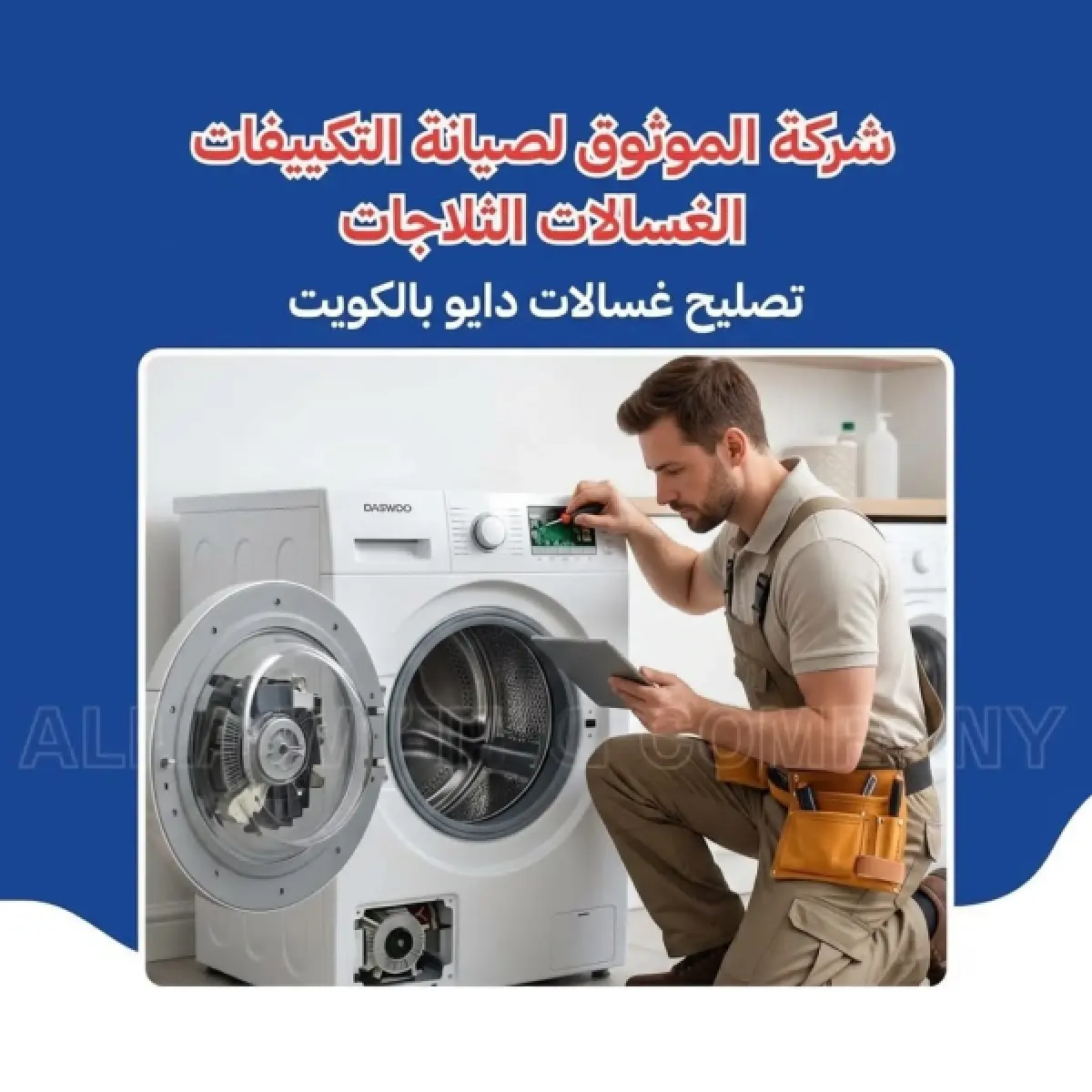
If a Daewoo washing machine leaks water from underneath, it is important not to assume that the source is actually at the bottom of the appliance because water may begin from a hose or connection higher up and then run down and collect underneath.
The first useful detail is the timing of the leak. If water appears during filling, attention moves toward the water inlet path. If it begins during drainage, the drain hose and related connections become more relevant. If the leak appears while the drum is moving, the source may be in a different area.
The amount of water also matters. A single small drop is different from a continuous pool that grows during the cycle. If the leak is visible and repeated, running another cycle simply to see whether it becomes worse is not recommended.
Visible hoses and connections can be checked externally without moving the washing machine aggressively or opening internal components. Sometimes a hose may be loose or no longer positioned correctly after the appliance has been moved.
If water is close to the electrical outlet or wiring or if the circuit breaker trips, safety becomes the first priority and the washing machine should not be restarted.
Placing a towel underneath the appliance and continuing to use it for a long period is another mistake. The towel may hide the water, but it does not correct the source and can allow the problem to become worse without being noticed.
• Identifying when the leak begins helps determine whether the source is more likely connected to filling drainage or another area of the washing machine
• Inspecting visible hoses and external connections can sometimes reveal a simple cause without dismantling the appliance
• A repeated leak needs diagnosis even if the amount of water is limited because the problem may become larger with continued use
• Water close to electrical components is a reason to stop the washer and avoid another startup attempt before inspection
Booking a Daewoo Washing Machine Technician
Before booking a Daewoo washing machine technician, it is useful to collect information that can help the technician understand the condition from the first visit. The model number if visible, any error code shown on the display, and a description of the exact stage where the problem appears can all be useful.
If the washer does not drain, explain whether all the water remains in the drum or whether some of it leaves. If it does not spin, mention whether drainage completed and whether the problem happens with every type of load. If there is leakage, explain when the water begins to appear. These details can eliminate many unrelated possibilities.
It is also helpful to mention whether the problem started after moving the washer, changing a hose, or a power interruption. Events immediately before the fault can sometimes provide an important diagnostic clue.
From a cost perspective, ask what the visit charge includes and whether diagnosis is separate from any repair or replacement part. The final fault price can be difficult to determine before inspection because the same symptom may have several different causes.
During the visit, the technician should begin with diagnosis and then explain the findings. If a replacement part is recommended, ask how that part is connected to the fault and what was tested before reaching that conclusion.
After the repair, the washing machine should be tested at the same stage where the problem originally appeared. If it failed to drain, water should be confirmed to leave correctly. If it failed to spin, the spin cycle should be observed. If it leaked, the same stage should be monitored.
• Preparing the model number and a photograph of any error code provides the technician with clearer information before inspection begins
• Describing the fault according to the exact stage where it appears reduces time spent inspecting parts that are unrelated to the problem
• Understanding what the visit charge includes before booking makes both the service scope and expected cost clearer from the beginning
• Testing the exact function after repair is the practical way to confirm that the cause was corrected instead of only seeing the washing machine turn on
Conclusion
Daewoo washing machine faults can look similar from the outside, but the correct diagnosis depends on the exact stage where the problem appears. A washer that does not start needs a different inspection from one that stops in the middle of the cycle, and a machine that does not drain does not necessarily have the same cause as one that does not spin. The correct approach to Daewoo washing machine maintenance in Kuwait is to observe appliance behavior, identify when the problem appears, and review simple external conditions before considering internal repair. If the fault keeps returning, there is leakage, severe vibration, water remains inside the drum, or electrical tripping occurs, booking an in-home technician becomes more appropriate than repeatedly restarting the washer. Clear diagnosis before component replacement helps select the correct repair and reduces the risk of paying for work that is unrelated to the real cause.
Frequently Asked Questions
Why does my Daewoo washing machine not start?
The cause may be related to the electrical supply, the door or lid, an operating condition that has not been completed, or an internal fault. The first step is to determine whether the display is on or completely dark.
What should I do if my Daewoo washing machine stops in the middle of a cycle?
Notice the exact stage where it stops, whether the display remains on, whether water is still inside the drum, and whether an error code appears. These details help identify whether the problem is related to drainage, drum movement, or appliance operation.
Does failure to drain mean the pump is damaged?
Not necessarily. The drain hose or an obstruction in the drainage path can create the same symptom, so external conditions should be checked before the pump is declared faulty.
Why does the washing machine not spin even though it washed the clothes?
Drainage may not have completed, the load may be unbalanced, or another condition may be preventing the program from moving into the spin stage. Water removal should be confirmed first.
Can a heavy load cause vibration?
Yes. Heavy clothes collected on one side can create significant imbalance, especially during the spin cycle.
When is spin noise considered abnormal?
If the sound is new, very loud, accompanied by rubbing, or the washing machine moves from its position despite proper loading and stability, inspection becomes appropriate.
Why is water appearing underneath the washing machine?
The source may be a hose, connection, or internal area. The most useful information is when the leak begins rather than only where the water collects.
Can I continue using the washing machine with a small leak?
If the leak returns or the source is unknown, it is better to stop using the washer because the amount of water can increase or reach electrical areas.
Can restarting the washing machine solve a stoppage problem?
Restarting may allow the washer to continue temporarily if the cause was temporary, but repeated stoppage means restarting is not a real solution to the underlying problem.
When should I call a technician for a Daewoo washing machine?
A technician should be considered when the fault keeps returning, the washing machine does not start, does not drain, does not spin, leaks water, vibrates severely, or develops an unusual sound.
Can the technician give me the final price before seeing the washing machine?
You may be able to know the visit charge or the price range for a specific service, but the final repair cost depends on the actual cause and the required work or replacement part after diagnosis.
Is in-home inspection suitable for Daewoo washing machines?
Yes. It allows the technician to inspect the washing machine in its normal environment together with the electrical supply, water source, drainage, and appliance stability.
What information should I prepare before booking a technician?
Prepare the model number if available, photograph any error code, identify the stage where the fault occurs, and note whether water enters and drains normally and whether there is any unusual sound, leakage, or vibration. These details help make diagnosis more accurate.