Samsung Refrigerator Repair in Kuwait: Cooling & Home Service
When a Samsung refrigerator starts losing cooling performance or you notice the compressor switching on and off in an unusual pattern, the problem should not be handled through guesswork or by replacing a component during the first visit. A refrigerator cooling system depends on several parts working together, and a fault in airflow, sensors, defrost operation, or the compressor can create very similar symptoms. In this guide, we explain Samsung refrigerator maintenance in Kuwait from the perspective of diagnosing the cooling system itself rather than simply listing common faults. We also explain how a refrigerator should be inspected at home, when weak cooling may have a simple cause, when technical measurements are necessary, and what you should know before approving an expensive repair or major component replacement.
Samsung Refrigerator Maintenance in Kuwait
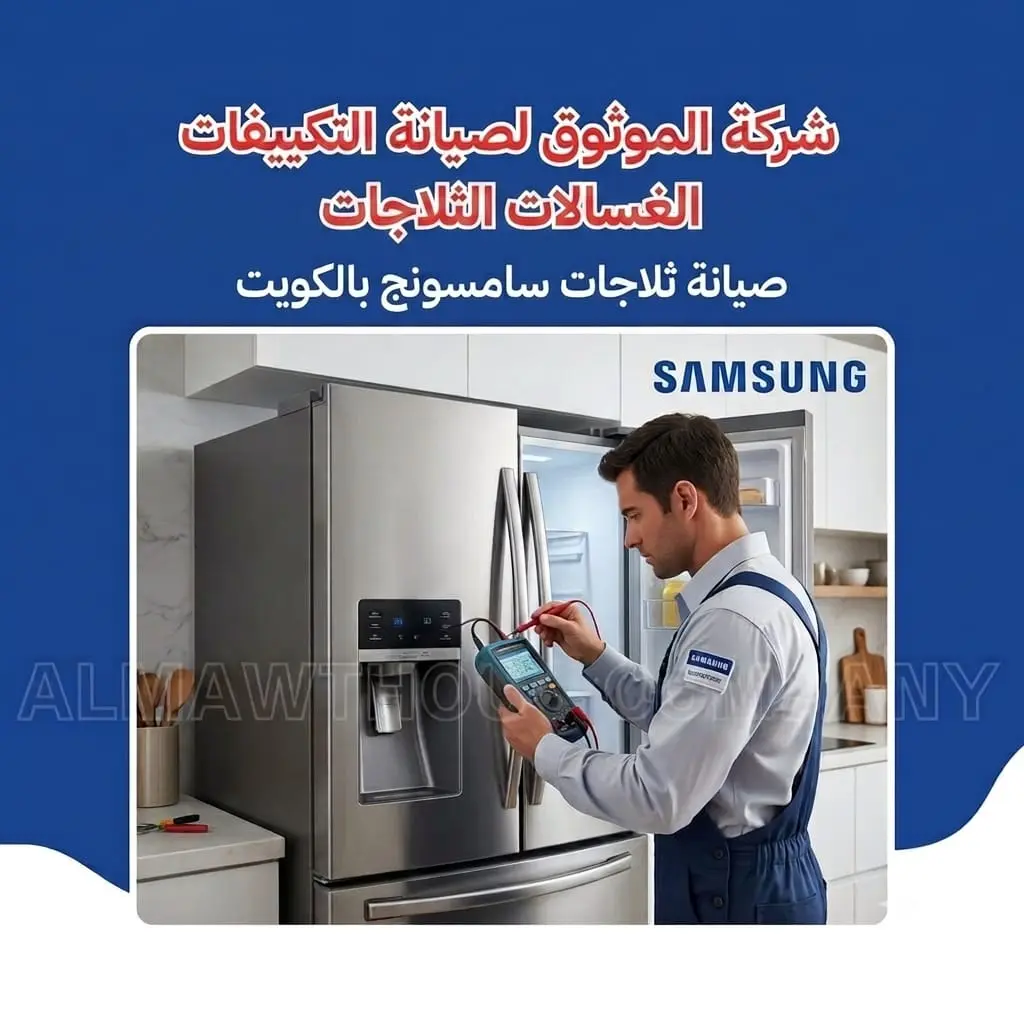
Proper Samsung refrigerator maintenance in Kuwait begins with understanding the customer’s complaint accurately because saying “the refrigerator is not cooling properly” can describe several completely different situations, and those situations should not be diagnosed in the same way. The freezer may still be cold while the refrigerator compartment is warm, cooling may be weak in both compartments, or the appliance may reach an acceptable temperature and then become warmer again after several hours. Each situation gives the technician a different diagnostic direction. In the first case, for example, attention should be given to airflow between compartments and the way cold air is distributed according to the model design. Weak cooling in both the refrigerator and freezer raises different possibilities related to overall operation, the refrigeration system, compressor performance, and control components. This is why professional maintenance should begin with measurement and observation rather than with a ready-made conclusion such as “it definitely needs refrigerant” before anyone has properly inspected the appliance.
Another important advantage of home inspection is that the technician sees the refrigerator under its normal operating conditions. Ventilation around the appliance, food arrangement, repeated door opening, and the condition of the door gasket can all influence temperature. If the refrigerator is installed in a tight space with poor airflow around it, or the door does not seal correctly, performance can suffer without there being a major refrigeration-system fault. Ice accumulation in certain areas or weak airflow from internal vents can also make one part of the refrigerator colder than another and create the impression that the compressor is responsible when the real cause is elsewhere.
Correct maintenance should also distinguish preventive care from actual repair. Cleaning accessible ventilation areas, checking the gasket, and organizing food properly are useful steps, but they do not replace technical diagnosis when the appliance still fails to reach an appropriate temperature under normal conditions. In that case, the technician should measure temperatures, monitor compressor and fan operation, inspect sensors, and determine whether cooling is developing normally. The goal is not simply to make the refrigerator feel “a little colder.” The real goal is to understand why performance changed and correct the actual cause instead of repeatedly treating symptoms.
-
Check whether weak cooling affects only the refrigerator compartment or both the freezer and refrigerator because the distribution of the problem removes many possibilities and gives the technician a clearer diagnostic direction
-
Observe whether cooling becomes weaker only after several hours of operation or remains weak from the beginning because an intermittent cooling problem requires a different diagnostic approach from a refrigerator that never reaches a suitable temperature
-
Make sure the door closes completely and nothing prevents the gasket from sealing because continuous warm-air leakage can force the appliance to run longer and make the problem appear more serious than it actually is
-
Do not approve refrigerant charging or compressor replacement before the cause of weak cooling has been investigated with proper measurements because the same symptom can come from several different faults
Samsung Refrigerator Repair in Kuwait
When you need Samsung refrigerator repair in Kuwait, the most important point is that the repair should not be based only on the visible symptom. A refrigerator is not a simple appliance where one operating or non-operating component tells you the complete story. Its cooling system is an interconnected chain involving the compressor, refrigeration circuit, airflow, sensors, temperature control, and defrost functions depending on the model. For this reason, weak cooling can be caused by restricted airflow, a fan problem, abnormal ice accumulation, inaccurate sensor readings, or an actual fault in the refrigeration circuit. If a technician reduces all of these possibilities to “let us add refrigerant” within the first minute, that is not diagnosis. That is simply guessing and hoping the invoice survives the experiment.
Professional repair begins with information the customer can provide. Did the problem appear suddenly or did cooling gradually become weaker? Are there new sounds? Is the freezer still freezing properly? Does the refrigerator run for very long periods without stopping? Is there unusual ice buildup in a certain area? These details help the technician decide which tests make the most sense. Actual temperature should then be measured instead of relying only on touching food or air by hand. Saying “the water does not feel very cold” gives an impression, but a measured temperature shows the real extent of the problem and creates a useful reference point for checking improvement after repair.
From a cost perspective, the price of repair depends on the actual cause rather than on the sentence “the refrigerator is not cooling.” Correcting an airflow problem or a simple installation issue is completely different from repairing the refrigeration circuit or replacing a major component. That is why inspection should come first, followed by a clear explanation of the cause and expected cost before work begins. If a replacement part is recommended, the customer should know how the existing part was tested and why it was confirmed as faulty. After repair, the refrigerator should be allowed enough time to reach a stable operating temperature and cooling should be measured again. A running compressor alone does not prove that the repair succeeded.
-
Ask for actual temperature measurements before and after repair instead of relying only on how cold the refrigerator feels because measured values provide clearer evidence that performance has improved
-
Tell the technician whether the cooling problem appeared suddenly or developed gradually because the way the fault developed helps distinguish airflow control and refrigeration-system problems
-
Do not treat compressor operation as proof that the refrigerator is healthy because the compressor may run while the appliance still fails to produce the required cooling because of another fault
-
Agree on repair cost after diagnosis rather than before inspection based only on the visible symptom because the difference between a simple fault and a refrigeration-system problem can be significant in both labor and price
Samsung Refrigerator Technician in Kuwait

Choosing a Samsung refrigerator technician in Kuwait requires more than finding someone who can arrive quickly and say, “Leave it to me.” Good cooling diagnosis depends on questions, measurements, and a logical sequence of testing. A specialist usually begins by asking how the refrigerator has behaved recently. Has food started spoiling faster? Is the freezer still freezing normally? Does the compressor run continuously? Can you hear the fan? Is there a clicking sound or repeated stopping? Did the problem begin after a power outage, moving the appliance, or leaving the door open for a long time? These questions are not unnecessary conversation. They help distinguish a sudden failure from a problem that developed gradually over days or weeks.
A good technician also understands that refrigerator diagnosis cannot be completed in the first few minutes simply by touching pipes or listening to the compressor. Actual compartment temperatures should be checked, airflow should be observed, fans and ice buildup should be inspected, and the door seal should be evaluated. Only when the evidence points toward the refrigeration circuit should deeper technical testing begin. The real skill is not knowing the names of the components. The real skill is knowing how to eliminate unlikely causes in the correct order. If the freezer is very cold while the refrigerator compartment is warm, it would make little sense to jump immediately to the compressor because there is already evidence that part of the system is producing cooling. If both compartments are weak while the compressor runs for long periods, the diagnostic direction changes.
Another sign of a trustworthy technician is the ability to explain the cause in understandable language and describe what was checked before recommending an expensive repair. If the decision is between a major repair and replacement of the appliance, refrigerator age, overall condition, and repair history should be included in the decision. Not every old refrigerator should automatically be replaced, and not every refrigerator that still runs is worth repairing at any price. A professional technician should help you choose the most reasonable and economical option and verify the result after repair instead of assuming that a quieter sound or a running compressor means the problem is over.
-
Choose a technician who asks about the pattern of cooling loss and measures actual performance before recommending repair because organized information and testing are more reliable than judging one component quickly
-
Ask why airflow sensor door-seal or other possibilities were ruled out before a refrigeration-system repair is suggested because understanding the diagnostic logic protects you from unnecessary component replacement
-
If the repair is expensive compare the cost with refrigerator age condition and fault history because the correct decision is not always the cheapest repair or the most expensive repair but the option that makes the most sense for the appliance
-
After the work is completed the refrigerator should be given enough time to return to an appropriate stable temperature because compressor sound or fan movement alone does not prove that the repair has restored proper cooling
Samsung Refrigerator Not Cooling
When a Samsung refrigerator is not cooling at all or cooling is much weaker than normal, the most important thing is not to begin with the most expensive possibility. Many people feel that food is no longer as cold as before and immediately assume that the compressor has failed. In reality, weak or absent cooling can have several causes, including poor cold-air distribution, abnormal ice buildup that blocks airflow, a fan problem, incorrect sensor readings, or an actual issue inside the refrigeration circuit. The first step is therefore to determine whether the freezer still freezes normally, whether only one compartment is affected, and whether the compressor runs for long periods or switches off quickly. These details completely change the diagnostic direction and prevent one component from being blamed without evidence.
From a usage perspective, there are also a few simple conditions worth reviewing before requesting technical service. Make sure the door closes properly and that no container or drawer prevents sealing. Confirm that internal air vents are not blocked by food, and check that the temperature setting was not changed accidentally. If the refrigerator was disconnected, moved, or left open for a long period, it should be given suitable time to return to normal operating conditions before judging performance. However, if the appliance had been stable and then suddenly lost cooling or gradually became weaker day after day, the problem deserves real diagnosis rather than repeatedly changing the temperature setting.
A specialist should measure temperature in more than one location, compare freezer performance with the refrigerator compartment, and inspect airflow, fan operation, and compressor behavior. If unusual ice buildup is found, the reason for that buildup should be investigated rather than simply melting the ice. If the ice returns after a short time, then the symptom was removed but the original cause was left untouched. If evidence points toward the refrigeration circuit, that conclusion should be supported by appropriate testing before major repair is considered.
-
Check whether the freezer still freezes while the refrigerator compartment remains warm because this difference gives a strong clue toward airflow distribution rather than complete loss of refrigeration
-
Make sure internal air vents are not blocked by food because heavy packing can prevent cold air from reaching the correct areas even when the refrigerator is producing cooling normally
-
If cooling disappeared suddenly after a long period of normal operation record any unusual sound or change that happened at the same time because the timing and accompanying symptoms can narrow the possible causes
-
Do not keep changing the temperature setting repeatedly when the problem remains constant because changing settings cannot repair an actual fault and may make the operating pattern harder to evaluate
Weak Cooling in a Samsung Refrigerator
Weak cooling in a Samsung refrigerator is different from complete cooling failure because it can be much easier to ignore. The appliance still runs, you can hear normal operating sounds, and the interior still feels somewhat cold, but food does not stay at the same temperature as before, drinks take longer to cool, or the freezer does not freeze as strongly. This type of problem may continue for some time and encourage the user to simply adapt to it until the loss of performance becomes obvious. That is why the first practical step is comparing current behavior with the refrigerator’s previous normal performance rather than asking only whether there is “some cold air.” If the appliance now takes much longer to recover after the door is opened or food is spoiling faster under the same usage pattern, those are meaningful signs.
The causes of weak cooling can be simple, such as warm-air leakage through the door gasket, blocked internal air vents, or excessive food loading. They can also be technical, such as weak fan performance, abnormal ice buildup in an air path, inaccurate temperature sensing, or a problem inside the refrigeration circuit. Correct diagnosis therefore needs to determine whether the issue is related to airflow or to the refrigerator’s ability to produce cooling. If the freezer remains very cold while the refrigerator compartment is warm, the diagnostic direction differs from a refrigerator where both compartments are weak. If the compressor runs almost continuously without reaching the required temperature, that provides different information from a unit that shuts down too quickly before adequate cooling develops.
From an economic perspective, weak cooling is also the stage where early intervention can sometimes save more than waiting for complete failure. If the problem comes from a door seal, airflow restriction, or another limited issue, correcting it early may prevent the appliance from operating under unnecessary load for extended periods. At the same time, weak cooling should not automatically be treated as proof that the refrigerator needs refrigerant. Refrigerant does not simply “run out” like fuel. If a loss is confirmed, the reason for that loss should be investigated before any charging is performed.
-
Compare current cooling performance with the refrigerator’s previous behavior including how quickly it recovers after the door is opened instead of judging only whether the inside still feels generally cold
-
Observe the difference between freezer and refrigerator temperatures because strong cooling in one compartment and weak cooling in the other can help distinguish airflow problems from reduced refrigeration capacity
-
Inspect the door gasket visually and make sure food containers or drawers are not preventing complete closure because continuous warm-air leakage can reduce performance without a major internal failure
-
Do not treat refrigerant charging as the automatic solution to every weak-cooling complaint because any confirmed refrigerant loss should have an identifiable cause before charging is considered
Samsung Refrigerator Cooling Inspection
A proper Samsung refrigerator cooling inspection should be organized and based on measurements and observations rather than opening the door, touching the air, and deciding that “the cooling seems fine.” Good inspection begins by understanding usage conditions, then measuring actual temperatures in the compartments and comparing performance between them. Airflow should then be checked, along with fan operation, abnormal ice buildup, doors, and gaskets. If all of those elements appear normal while cooling remains weak, the technician can gradually move toward deeper testing of the refrigeration system and compressor rather than starting there immediately.
For more accurate results, the inspection should be carried out after the refrigerator has been running under stable conditions without frequent door opening. Opening the door repeatedly during measurement introduces warm air and makes it difficult to understand the true operating condition. The technician should also know the current temperature setting and whether the user changed it recently. Some people immediately turn the cooling setting to maximum as soon as a problem appears, which can make it harder to determine whether the appliance is responding normally to control changes. Professional inspection stabilizes the conditions first and then compares the results.
The compressor operating pattern should also be observed. Does it run for very long periods? Does it stop too quickly? Is its behavior consistent with the actual temperatures? Are the fans responsible for airflow operating as expected for the model? None of these indicators should be used alone. The value comes from combining them. Through organized inspection, the technician can determine whether the issue is internal and requires repair or whether the problem is related to airflow, installation, food arrangement, or door sealing. There is a big difference between data-based diagnosis and touching an internal wall and declaring the refrigerator healthy because it feels cold.
-
Ask for actual temperature measurements rather than relying on touch because the sensation of cold differs from person to person and does not provide a reliable value for comparison after repair
-
Let the refrigerator operate under stable conditions before inspection without repeatedly opening the door because every opening introduces warm air and affects the accuracy of temperature readings
-
Observe compressor and fan operation together with actual temperature because combining these indicators gives a more accurate picture than judging a single sound or component
-
If abnormal ice buildup is found the reason for its formation should be investigated rather than simply melting it because removing the visible result does not prevent the underlying problem from returning
Samsung Refrigerator Compressor Repair

Samsung refrigerator compressor repair should be approached carefully because the compressor is a major component and working on it is usually more expensive than dealing with many simpler faults. That means it should not become the first suspect simply because the refrigerator is not cooling. Before any major decision is made, the technician should confirm that the electrical supply and components involved in compressor operation are functioning correctly and that fans, airflow, and other parts of the cooling system have already been evaluated. There are situations where the compressor runs but cooling remains weak because the actual fault is elsewhere. There are also situations where the compressor does not start because another operating or control component requires inspection. Simply saying “I cannot hear the compressor” is not enough evidence to declare that it has failed.
Technical diagnosis should include appropriate measurements and observation of the compressor’s actual operating pattern. Does it attempt to start and then stop? Does it run continuously? Does it fail to respond at all? The condition of the refrigeration circuit also needs to be evaluated because repairing or replacing a compressor without understanding the rest of the system can result in a major expense without solving the underlying problem. If a large repair is proposed, the customer should be told what tests led to that recommendation, what alternative options exist, and what each option is expected to cost.
From an economic perspective, compressor repair should also be considered in relation to refrigerator age, general condition, and previous repair history. A relatively recent refrigerator in good condition may justify a major repair when the fault is clearly identified. An older appliance with several additional problems and a high repair cost may require a different decision. The right choice should not be emotional because “this refrigerator has been with us forever,” and it should not be careless because “just replace everything.” It should be based on expected cost, appliance condition, and the likely value of the repair after completion.
-
Do not approve compressor repair or replacement before other possible causes of weak cooling have been checked because the compressor is an expensive component and any decision involving it should be supported by confirmed diagnosis
-
Ask what tests proved that the compressor itself is faulty because hearing or not hearing it operate is not enough to determine its actual condition
-
If the repair is major compare the cost with refrigerator age and overall condition because the objective is not simply to make the appliance run again but to make an economically sensible repair decision
-
After any work involving the compressor the refrigerator should be monitored for its ability to build and maintain proper cooling because compressor operation alone does not prove that the refrigeration system has returned to normal
Samsung Refrigerator Keeps Switching Off
When a Samsung refrigerator keeps switching off, the first thing is to define what “switching off” actually means. There is a major difference between normal compressor cycling after the appliance reaches the required temperature and rapid repeated stopping that prevents the refrigerator from cooling properly. A healthy refrigerator does not need the compressor to run continuously all day, but if it starts for only a short time, stops, then repeatedly attempts to restart while cooling remains weak, that pattern requires attention. There is also a completely different situation where the whole refrigerator loses electrical power and the display or interior lights turn off before coming back. That should not be confused with normal compressor cycling.
Possible causes vary according to the exact pattern. There may be a problem with electrical supply or connection, a component related to compressor startup, an unstable control signal, or another condition that repeatedly interrupts operation. The first useful observation is whether the rest of the refrigerator remains powered when the compressor stops. Do the lights and display stay on? Is there a clicking sound or an attempted restart? This distinction helps the technician determine whether the problem is a general electrical issue or something more specific to the compressor or cooling-control system.
Repeatedly unplugging and reconnecting the refrigerator is not a useful long-term test, especially if the compressor repeatedly tries to start and then stops. Constant power cycling can place additional stress on operating components. It is better to document the pattern. How often does it stop? Does cooling weaken at the same time? Does an error code appear? Did the problem begin after a power interruption or another event? If there is also an unusual smell, excessive heat, or a strong abnormal sound, stop using the appliance until it can be inspected.
-
Distinguish normal compressor cycling after reaching temperature from rapid repeated stopping accompanied by weak cooling because the second pattern requires diagnosis and should not be treated as ordinary operation
-
Check whether the display and interior lights remain on when the compressor stops because this helps separate a general power problem from a cooling-system or compressor-control issue
-
Record whether stopping is accompanied by a clicking sound or repeated startup attempt because this information helps the technician identify the stage where operation is failing
-
Do not repeatedly disconnect and reconnect the refrigerator when the problem continues because repeated power cycling does not correct the cause and may place additional stress on operating components
Diagnosing Samsung Cooling Faults
Proper diagnosis of Samsung cooling faults depends on combining several pieces of evidence rather than relying on one visible symptom. A technician should begin by determining whether the problem affects one compartment or both, then measure actual temperatures, observe airflow, inspect fan operation, check for abnormal ice buildup, evaluate door sealing, and monitor compressor behavior. Only after those steps should deeper refrigeration-system testing be considered. This is what separates professional diagnosis from replacing components by trial and error. The same complaint that “the refrigerator feels warm” can come from a door gasket, fan, ice buildup, sensor, refrigeration circuit, or even poor ventilation around the appliance.
Time is also important in diagnosis. Some faults appear only after the refrigerator has been running for several hours. For example, airflow may seem normal at first and then gradually weaken because of ice buildup or another condition that develops over time. If the technician looks at the refrigerator for only a few minutes immediately after power-up, the real problem may not appear. This is why the customer’s description of the pattern matters so much, especially when the refrigerator cools normally in the morning but becomes weak later in the day, or works properly for a period and then performance drops. These details guide the inspection toward the right operating conditions instead of relying on one isolated moment.
From a trust and reliability perspective, the technician should be able to explain why a certain diagnosis was reached and discuss the cause and cost before repair begins. If the conclusion is “refrigerant,” ask why. If it is “fan,” ask what confirmed it. This is not about turning the service visit into an interrogation. It is simply reasonable to expect paid repair work to be supported by clear evidence. The more organized the diagnosis, the lower the chance of paying for one component only to discover that the real problem was somewhere else.
-
Connect the location of weak cooling with the time when it appears because differences in compartment and timing help distinguish airflow problems from faults involving actual cooling production
-
If the problem develops only after several hours of operation explain that clearly because a quick inspection may fail to reveal an intermittent or gradually developing fault
-
Ask for an explanation of the diagnostic reasoning before any part is replaced because a clear technical explanation protects you from repair based on guesswork and helps you understand the value of the work
-
If several causes remain possible they should be tested and eliminated in a logical order instead of replacing parts one after another because the goal is to prove the fault rather than experiment with the customer’s budget
Booking a Samsung Refrigerator Technician at Home
Before booking a Samsung refrigerator technician at home, try to prepare a clear description of the problem instead of simply saying “the refrigerator is broken.” For example, explain that the freezer still freezes while the refrigerator compartment is warm, that both sections are weak, that the compressor starts and stops quickly, or that unusual ice is forming in a particular area. If the refrigerator has a display showing temperature or an error code, take a photo. If you know the model number, have it ready. These details allow the technician to begin from a more advanced point instead of spending the first part of the visit collecting information that could have been provided beforehand.
When booking, ask about the inspection fee and how repair cost is determined, including whether the final price will be explained before any component is replaced. It is also useful to ask whether the inspection is performed at home and whether the technician has the tools required to measure temperature and diagnose cooling faults rather than simply performing a quick visual check. Home service is especially useful for refrigerators because moving them can be inconvenient and may change the conditions connected to the fault, particularly when the problem involves ventilation, installation space, or door sealing. The real advantage comes when the technician uses the home environment as part of the diagnosis.
After repair, do not rush to decide within two minutes that the refrigerator is back to normal. Cooling needs time to reach a stable state after certain types of work. The technician should explain what you should expect during the following hours and when performance should be considered normal. If the original problem involved warm-air leakage through the door or poor airflow distribution, those conditions should also be checked after repair. A successful booking is not simply one where the technician arrives. It is one where you receive a clear diagnosis, understandable repair, and a practical way to verify that the refrigerator is cooling properly again.
-
Prepare a precise description of where cooling is weak and take photos of any error code or abnormal ice buildup because advance information saves diagnostic time and helps the technician focus on the most relevant possibilities
-
Ask about the inspection fee and how repair cost is approved before any replacement begins because clear pricing is an important part of trustworthy service
-
Choose a home service that can measure temperature inspect airflow and observe the operating pattern instead of relying only on a quick look or the sound of the compressor
-
After repair ask how long the refrigerator should take to stabilize and how to verify the result because cooling performance cannot be judged two minutes after restart like switching on a light bulb
Conclusion
Samsung refrigerator maintenance requires real diagnosis of the cooling system because weak or missing cooling can come from something relatively simple such as a door-sealing or airflow problem, or it may involve a fan, sensor, ice buildup, compressor, or another part of the refrigeration system. For that reason, immediately blaming the compressor or refrigerant without measurements can easily lead to unnecessary cost. A better approach is to observe the difference between freezer and refrigerator performance, note when cooling becomes weak, monitor compressor operation, and then inspect the appliance in an organized sequence from simpler possibilities toward more complex ones.
If you need Samsung refrigerator maintenance in Kuwait at home, choose a technician who explains the cause, measures actual performance, and gives you clear repair costs before beginning the work. If the refrigerator repeatedly switches off, loses cooling significantly, or produces an unusual sound or smell, avoid prolonged experimentation. The objective is not to make the refrigerator feel cold for one hour. The objective is to identify and correct the real cause so the appliance returns to stable cooling without placing unnecessary strain on the remaining components.
Frequently Asked Questions
Why is my Samsung refrigerator not cooling even though the compressor is running?
A running compressor does not guarantee that cold air is reaching the compartments correctly. The problem may involve airflow distribution, a fan, abnormal ice buildup, a sensor, or an actual fault within the refrigeration circuit. Freezer and refrigerator temperatures should be compared and measured before the cause is determined.
Does weak cooling mean my Samsung refrigerator needs refrigerant?
Not necessarily. Weak cooling has many possible causes and some have nothing to do with refrigerant. If refrigerant loss is actually confirmed, the reason for the loss should be identified before charging so the same problem does not return after a short period.
When does repeated compressor starting and stopping indicate a fault?
If the compressor starts, stops quickly, and repeatedly tries to restart while cooling remains weak, the refrigerator should be inspected. Normal cycling after the appliance reaches the required temperature is a standard part of refrigerator operation and should not be confused with rapid repeated stopping.
Can ice buildup inside a Samsung refrigerator reduce cooling?
Yes. If ice forms in a location that restricts airflow, the freezer may remain cold while the refrigerator compartment becomes warm. Temporarily melting the ice may restore performance for a short time, but if the buildup returns, the underlying cause needs to be diagnosed instead of repeatedly defrosting the appliance.
What information should I prepare before booking a Samsung refrigerator technician?
Prepare the refrigerator model number if available, explain whether the problem affects the freezer, refrigerator compartment, or both, mention whether the compressor runs continuously or stops quickly, and take photos of any error code or unusual ice buildup. These details help the technician begin the diagnostic process more accurately during the first visit.