Toshiba Washer Losing Efficiency? When to Book Home Service
A Toshiba washing machine can continue running and complete its programs while its overall performance gradually declines without showing a clear fault that completely stops the appliance. You may notice that cycles take longer than usual, clothes come out less clean, the washer vibrates more during spinning, or water enters more slowly. The problem is that these changes are easy to ignore, even though they can sometimes be the first warning signs that the washer needs maintenance before a complete failure develops. In this article, we explain weak Toshiba washing machine efficiency from a practical perspective, how to distinguish between normal changes caused by the load or selected program and genuine performance loss that deserves a home inspection, and what should be checked before considering any repair.
Weak Toshiba Washing Machine Efficiency
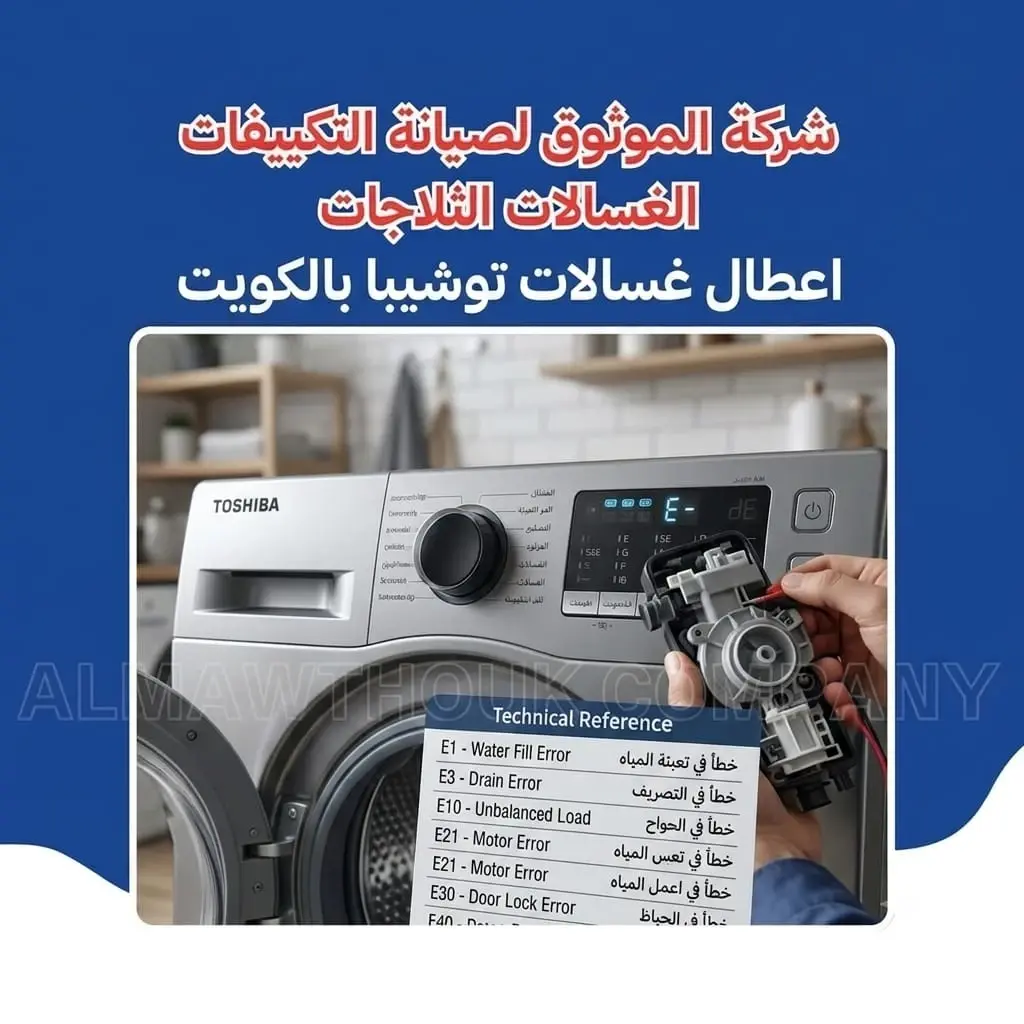
Weak Toshiba washing machine efficiency does not necessarily mean the appliance has stopped working or that a major component has failed. It means the washer is no longer producing the same results you were used to under similar operating conditions. A cycle that previously finished within a familiar period may start taking longer, clothes may need to be washed again, or the spin stage may leave more water in the fabrics than before. The important point is not to judge the machine from one isolated cycle because load size, fabric type, detergent, and program selection can naturally change the result. However, when the same decline keeps appearing under comparable conditions, it becomes a useful sign that something deserves closer inspection.
The first step is reviewing the way the washer is currently being used. Is the load larger than usual? Has the detergent type changed? Was a different program selected? Has household water pressure become weaker? If all of these conditions are roughly the same while performance continues to fall, attention should shift toward the washer’s main functions: water intake speed, drum movement, drainage, load balancing, and spinning response. In some cases, the cause may be relatively simple, such as a partially restricted water inlet or a hose compressed behind the machine. In other situations, it may be the beginning of weakness in a component that should be checked before it fails completely.
This is where home maintenance becomes useful because the technician can compare how the washer actually performs instead of simply confirming that it “turns on.” The technician can observe timing, sound, movement, water intake, and drainage, then identify which stage is slower or weaker than expected. The goal is not to open the washing machine immediately. It is to determine where efficiency has dropped and why. A washer that still runs is not necessarily a washer that is still working efficiently, and many users only discover that difference after the program becomes dramatically longer than it used to be.
-
Compare washer performance using the same type of load and program you previously used because changing operating conditions can affect results and create the impression of a fault when the difference is actually normal
-
Watch whether the decline appears in several functions such as slow water intake weak spinning and longer cycle duration because several connected signs create a stronger reason for technical inspection
-
Confirm that detergent quantity load size and settings have not changed before judging appliance efficiency because some poor results are connected to usage rather than an internal fault
-
If performance continues to decline gradually over several cycles do not wait for the washer to stop completely because early maintenance may identify the cause while it is still limited
Toshiba Washing Machine Has a Long Wash Cycle
When a Toshiba washing machine has a long wash cycle, the first question is whether the selected program is naturally designed to take longer or whether a new delay has actually developed. Some economy programs or cycles designed for heavier fabrics may take much longer by design, so the comparison should be made using the same program and a roughly similar load. If a program whose duration you already know suddenly becomes noticeably longer, attention should shift toward the stage where the extra time is being lost. Is the washer waiting too long for water? Does it repeatedly redistribute the laundry before spinning? Has drainage become slower? Or does the machine pause unexpectedly and then continue later?
Slow water intake can add significant time because the washer must wait until the required water level is reached before moving to the next stage. Slow drainage can have a similar effect because the program may not move into spinning until the water level drops sufficiently. In other situations, an unbalanced load can cause the machine to repeatedly redistribute clothes before attempting high-speed spinning. All of these causes produce the same final complaint — “the washing machine took too long” — but they should not be handled using the same repair approach.
A practical inspection focuses on the duration of individual stages rather than only the final cycle time. If most of the delay occurs during filling, the water inlet should be reviewed. If the delay happens before spinning, drainage and load balance deserve attention. If the washer pauses without an obvious reason in the middle of the program, diagnosis needs to expand further. The important thing is not to immediately assume that a long cycle means an electronic-board or motor fault. The total time does not tell you the name of the failed component. It simply tells you where to begin looking more carefully.
-
Compare the duration of the same program with a similar load because a different cycle or different amount of laundry can naturally change operating time without indicating a fault
-
Notice whether the longest delay happens during filling drainage or immediately before spinning because the location of the delay is more useful diagnostically than the total program duration
-
If the washer repeatedly redistributes clothes before spinning try a medium balanced load because the program may be extending itself to protect the appliance from an unbalanced load
-
If cycle duration remains consistently longer across several programs despite normal usage home maintenance can help identify the stage where time is being lost
Toshiba Washing Machine Does Not Clean Clothes Properly

When a Toshiba washing machine does not clean clothes properly even though the program finishes without an error code or complete stop, it is important to distinguish poor wash results from an actual mechanical or control failure. Weak cleaning can result from overloading the drum, which prevents clothing from moving freely, using an unsuitable amount of detergent, or selecting a program that is too gentle for the level of dirt. However, if the same clothes, detergent, and program used to produce better results and cleaning quality has gradually declined, then the washer’s performance itself should be examined instead of simply adding more detergent every time.
Water quantity, drum movement, and detergent distribution all affect cleaning quality. If the washer takes water in too slowly or fails to reach the appropriate level within a normal period, the washing stage may begin under less effective conditions. If drum movement has become weaker or irregular, the clothing may not receive the normal lifting and movement that helps remove dirt. In another situation, detergent residue in the drawer or poor water flow through it can prevent the full amount of detergent from entering the wash cycle correctly.
One common mistake is increasing detergent whenever clothes come out less clean. Excess detergent may create more foam and leave more residue without actually improving the wash. A better approach is to begin with an appropriate load, the correct detergent quantity, and a program suitable for the type of dirt. If results remain weak, water intake, drum movement, detergent distribution, and drainage should then be checked. Wash quality is the result of several stages working together. It does not happen simply because the drum turned for an hour. If one part of the process becomes weaker, the final result may reveal the problem before the display shows any warning.
-
Try a suitable load rather than filling the drum to its maximum capacity because overcrowded clothing has less room to move and may prevent water and detergent from reaching everything evenly
-
Use an appropriate detergent amount instead of automatically increasing it when results become weaker because excess foam can leave residue without correcting the actual cause of poor cleaning
-
Observe whether the drum still moves with the same strength and whether water enters normally because reduced movement or insufficient water can weaken wash quality even when the program finishes
-
If clothes continue coming out less clean under the same usage conditions that previously worked well it is better to inspect washer performance instead of changing detergents and programs repeatedly
Toshiba Washer Vibration During Spin
When Toshiba washer vibration during spin becomes noticeably stronger than before, you first need to distinguish normal movement at high speed from genuine vibration that makes the appliance move across the floor or produces heavy knocking. One of the first things to check is load balance because one heavy item sitting mainly on one side of the drum can cause the washer to repeatedly redistribute clothing before reaching full spin speed. Floor level and the condition of the washer feet are also important because a small amount of unevenness can become much more obvious during high-speed spinning even when there is no internal fault.
If the vibration appears only when washing blankets or other large items and disappears with a normal medium-sized load, that information matters and should not be treated the same way as a washer that vibrates during every cycle. If movement and noise become stronger even with small, balanced loads, inspection should expand to the suspension system, drum movement, and components responsible for controlling vibration. If the problem began immediately after the washer was moved or installed in a new location, the installation should be reviewed before the appliance is opened.
It is also useful to observe whether the drum itself feels unusually loose when the machine is stopped or whether rubbing noise appears together with the vibration. These signs lead the technician in a different direction from a simple leveling problem. Home inspection is particularly valuable here because the technician can evaluate the washer on the same floor, in the same location, with the same connections where the vibration normally happens. The objective is not simply to make the washer quieter. It is to determine whether the problem comes from installation and loading conditions or from a developing mechanical issue that needs attention before it becomes worse.
-
Try a medium-sized balanced load because one heavy item concentrated on one side can create severe vibration even when the washer has no internal fault
-
Make sure the appliance is stable on the floor and the feet are adjusted correctly because even slight unevenness becomes much more noticeable during high-speed spinning
-
Notice whether vibration occurs with every load or only with large items because recurring movement with normal balanced laundry creates a stronger reason for technical inspection
-
If vibration comes with grinding or heavy knocking do not rely only on repositioning the washer because the cause may involve an internal component that needs diagnosis
Loud Noise From a Toshiba Washing Machine
A loud noise from a Toshiba washing machine does not automatically mean the appliance is heading toward a major failure, but the type of sound and the point in the cycle when it occurs are very important. Washing machines naturally produce sounds during water intake, drainage, and changes in drum speed. However, if a clearly new noise appears, becomes louder over time, or sounds very different from the washer’s normal operation, it deserves attention. Heavy knocking during spinning may be connected to an unbalanced load or a foreign object moving inside, while continuous rubbing even with a light load requires a different type of inspection. A humming sound that appears during drainage also points toward a separate area.
The most useful thing is identifying exactly when the sound occurs. Does it begin while water is entering? During drum movement? During drainage? Or only when the washer reaches high spin speed? Timing can save a technician a large amount of diagnostic work. It is also useful to determine whether the sound seems to come from inside the drum, underneath the washer, or from the rear. A small metal object left in a pocket can produce a surprisingly loud sound without there being a serious internal failure. However, if the noise continues even after the load has been removed or becomes progressively stronger, the source should be checked.
The washer should not continue running if the noise is extremely strong and is accompanied by a burning smell, unusual heat, or sudden stopping. Repeated operation under those conditions can turn a limited issue into larger damage. A technician should connect the sound with the operating stage and physical source instead of replacing a component based on sound alone. The washing machine is not a music band. Every sound has a timing and context that needs to be understood before the right repair decision can be made.
-
Identify which stage produces the noise because a sound during spinning has a very different meaning from a sound during drainage or filling and this can shorten diagnosis significantly
-
Check clothing pockets for coins and other metal objects before assuming the washer has an internal fault because a very small item can produce a surprisingly loud noise
-
If the sound continues even with a light balanced load the movement and suspension systems should be checked instead of assuming the laundry distribution is the only cause
-
Stop using the washer if the noise appears with a burning smell unusual heat or sudden stopping because continued operation may increase damage to movement-related parts
Toshiba Washing Machine Fills With Water Slowly
When a Toshiba washing machine fills with water slowly, you may notice that the program starts but remains in the filling stage for a long time before actual washing begins. The cause does not necessarily come from inside the appliance. The first things to check are household water pressure, whether the supply tap is fully open, and whether the inlet hose is bent or compressed. Some models may also have a small inlet screen where debris can collect over time and reduce flow. This is why slow filling should first be approached from the external water path before attention moves to internal controls or valves.
It is also important to determine whether the problem happens on every cycle or only at certain times of the day. If water intake is slow only when household water pressure is low and returns to normal at other times, the problem may not be the washer itself. If filling used to be normal and became slow immediately after the appliance was moved, the inlet hose may have been bent or the tap may not have been fully reopened. These are simple causes, but they can have a major effect on total program duration.
If water pressure, hose position, and the supply tap are all normal and the washer still fills slowly, then the technician may need to inspect the water inlet valve and the control or sensing functions related to water level according to the model design. It is not a good idea to increase pressure randomly or open internal parts without a clear reason. Proper diagnosis determines whether the restriction comes from the household water supply or from the washer’s own response. Slow filling can make the entire program longer, which is a good reminder that when someone says “the washing machine is slow,” the problem is not always the motor or control board. Sometimes the water is simply arriving too slowly.
-
Make sure the water tap is fully open and the hose is not bent because even a small restriction in the supply path can significantly extend the filling stage
-
Watch whether slow filling happens only at certain times of the day because changing household water pressure may be the real cause rather than the appliance
-
If the problem began after moving the washer check the hose position behind the machine before requesting a repair because bending after repositioning is a common and easy-to-correct cause
-
If water pressure is normal and the external path is clear but filling remains slow the inlet valve and water-level control should be inspected instead of repeatedly changing program settings
Declining Toshiba Washing Machine Performance
Declining Toshiba washing machine performance usually appears as a collection of small changes rather than one obvious fault. Laundry may come out less clean, spinning may become weaker, programs may take longer, and the sound of the appliance may change slightly. Each symptom by itself can appear minor, but when several changes develop during the same period, it becomes more likely that the washer is no longer operating at the efficiency it previously had. This is the point where waiting for complete failure is not especially useful because reduced performance may give you an opportunity to deal with the cause earlier.
The inspection should begin by comparing current usage with previous usage. If the detergent was changed, loads became heavier, or a different program is being used, those differences need to be considered. However, if operating conditions are almost the same while the washer has become slower and less effective, each stage should be reviewed individually: water intake, drum movement, drainage, spinning, and program response. Sometimes more than one small factor is involved, such as weaker water pressure combined with a dirty filter or an unsuitable load. In other cases, one developing component problem may affect several stages at once.
From a cost perspective, early maintenance is useful because it reduces the chance of reaching a point where expensive parts are replaced without a clear understanding of the original cause. If the decline is mild but consistent, a diagnosis should identify which function has lost efficiency. A gradual performance drop does not automatically mean the washer has reached the end of its life. The cause may be limited and may only require cleaning, adjustment, or a smaller repair. The objective is to identify what changed and return the appliance to its normal operating condition before the problem becomes larger.
-
Pay attention when several functions begin weakening during the same period because longer cycles weaker spinning and changing noise together provide a stronger signal than one isolated symptom
-
Compare performance using the same program and similar load whenever possible because changing usage conditions can create an inaccurate impression of washer efficiency
-
Do not wait until the appliance stops completely if the decline is clear and consistent because early inspection may identify a limited cause before it affects other components
-
If performance improves after correcting usage conditions or cleaning basic parts that suggests the problem was more operational than a major internal failure
Signs a Toshiba Washing Machine Needs Maintenance
Understanding the signs a Toshiba washing machine needs maintenance helps you respond at the right time instead of waiting only for the appliance to stop completely. Important warning signs include a newly extended cycle time, slower drainage, clothes coming out noticeably wetter after spinning, or stronger noise and vibration than usual. If the washer begins needing repeated restarts or the same issue keeps returning even though the program eventually completes, that is also a sign that something may no longer be operating with its previous efficiency.
Not every change means a technician is needed immediately. Some signs may be connected to load size, program settings, or water pressure, so the first step should be simple and safe user-level checks. If the problem disappears after correcting the load or cleaning a user-accessible area, that is a good result. However, if the same symptom continues despite these steps, a home maintenance visit becomes more reasonable. The goal is neither to jump to the most expensive solution at the first sign nor to ignore a repeated problem for too long.
Some warning signs require stopping the appliance rather than simply scheduling ordinary maintenance. These include a burning smell, obvious water leakage, strong mechanical grinding, or extremely abnormal drum movement. Such symptoms move beyond preventive maintenance and into direct technical inspection. Knowing the difference between a “monitor this” sign and a “stop using the washer” sign can save both time and money. Smart maintenance is not about arranging frequent visits. It is about recognizing when the washer needs attention and when it is clearly telling you to switch it off.
-
Monitor whether the same problem repeats more than once because a symptom that appears and disappears may be the beginning of a weakness that should be diagnosed before it becomes constant
-
Watch for changes in cycle duration spinning and drainage because these functions often provide early signs of declining performance before the washer stops completely
-
Do not treat every change as an immediate emergency when it is clearly connected to a load or setting but if the symptom continues after correction maintenance becomes justified
-
If there is a burning smell heavy leakage or severe mechanical noise stop the appliance and do not wait for routine maintenance because those conditions need faster inspection
Diagnosing Weak Toshiba Washing Machine Performance
Diagnosing weak Toshiba washing machine performance depends on collecting several details rather than focusing on one symptom. The technician should begin by asking what changes you have noticed. Has the cycle become longer? Are clothes less clean? Is spinning weaker? Is water intake slower? Has vibration increased? These signs can then be connected to the order of the wash cycle to identify which stage has begun losing efficiency. This is much more accurate than simply saying “the washer is old” or “the motor is probably getting weak” without testing.
Good diagnosis compares normal behavior with current behavior. If the washer fills slowly, the water source and hose should be checked before the inlet valve. If spinning is weak, drainage and load balance should be confirmed before focusing on the movement system. If cleaning results are poor, the load, detergent quantity, and drum movement should be reviewed. Each step removes one possibility and reduces the amount of guessing. This approach may even reveal that two smaller issues are working together instead of there being one large fault.
From a trust perspective, the technician should be able to explain what was found and why it was considered the cause of the performance decline. If a part is recommended for replacement, ask what test confirmed that it was weak or defective. If the solution is only cleaning or adjustment, there is no reason to add replacement parts. After any work is completed, the function that was performing poorly should be tested again and compared with its previous behavior. Diagnosis is not complete when a fault is given a name. It is complete when there is evidence that the washer has returned to normal performance.
-
Ask for each stage connected to the symptom to be checked rather than judging only the final result because weak spinning for example can come from drainage or load balance instead of the movement system itself
-
Connect several signs together because a long cycle combined with slow water intake provides a clearer diagnostic direction than treating each symptom separately
-
Ask what evidence led to the diagnosis before approving component replacement because logical testing reduces the chance of repairing something that was not the real cause
-
After service compare performance using the same program and similar load whenever possible because a realistic comparison is the best way to know whether the problem has actually been corrected
Home Maintenance Visit for a Toshiba Washing Machine
The main advantage of a home maintenance visit for a Toshiba washing machine is that the technician can inspect the appliance in the same location where the performance problem actually appears. This is especially useful for slow water intake, vibration, drainage problems, and unusually long cycle times. Water pressure, hose position, floor level, and the available space behind the washer can all affect operation. If the appliance is moved before inspection, part of the evidence explaining why performance declined may disappear.
Before the visit, it is better to leave the washer in its normal position whenever there is no safety concern such as leakage or a burning smell. Clear enough space for access to the rear and sides, and remember or write down the last time the problem appeared and which program was being used. The technician should begin by checking installation conditions and external factors, then run an appropriate cycle and observe the washer’s behavior. If the cause is simple, it can be corrected. If repair is required, the reason should be explained before work begins.
Home service also makes it possible to test the result in the same place after maintenance. If the complaint was vibration, spinning should be tested. If the issue was slow filling, water intake should be observed. If the program was taking too long, the stage that was losing time should receive the most attention. It is also important to understand the visit fee and what it includes before work begins. A good home service is not simply “we arrived and opened the washer.” It is a clear diagnosis, a real operating test, and an understandable explanation of what was reducing performance.
-
Leave the washer in its original location before inspection when there is no safety risk because the floor hoses and connections may be part of the reason performance has declined
-
Prepare a clear description of the warning signs and the program where they appear because advance information helps the technician test the appliance under more realistic conditions
-
Agree on the visit fee and what the price includes before work starts so any additional cost is clear and the service does not turn into open-ended spending
-
After maintenance test the function that was weak in the same installation position because successful operation under real conditions is the strongest evidence that efficiency has returned
Conclusion
Weak Toshiba washing machine efficiency does not always begin with a major failure or sudden shutdown. Sometimes the warning signs are quieter: a longer cycle, poorer cleaning, slower water intake, or stronger vibration and noise than before. Ignoring these changes for too long can allow the problem to develop, but at the same time it is not useful to jump immediately to major repairs at the first sign. A better approach is to compare performance under similar usage conditions, review the simple causes first, and request inspection when the decline continues.
If you notice a clear and repeated decline in Toshiba washing machine performance, a home maintenance visit can be especially useful because the appliance can be checked together with its hoses, water pressure, floor level, and real connections. The more the diagnosis depends on comparison and observation rather than assumptions, the better the chance of finding the correct cause. The goal is not simply for the washer to “run.” The goal is for it to return to washing, spinning, draining, and completing programs with efficiency close to its normal performance.
Frequently Asked Questions
Why has my Toshiba washing machine started taking longer to wash?
The cause may be slower water intake, slow drainage, repeated load redistribution before spinning, or simply a different program. If the same program consistently becomes longer under similar conditions, it is better to identify the stage where the delay occurs.
Does poor cleaning mean my Toshiba washer is faulty?
Not necessarily. Overloading, detergent quantity, or an unsuitable program can reduce cleaning quality. However, if the same usage conditions that previously gave good results now consistently produce poorer cleaning, water intake, drum movement, and detergent distribution should be checked.
Is vibration during the Toshiba washer spin cycle normal?
A small amount of movement can be normal, but if the washer moves from its position or produces heavy knocking even with a medium balanced load, stability, leveling, and the mechanical components connected to the drum should be checked.
When does slow water intake indicate a washer problem?
If household water pressure is good, the supply tap is fully open, and the hose is not restricted but the washing machine still fills slowly, the inlet valve or components involved in water-level control may need inspection.
When should I book a home maintenance visit for a Toshiba washer?
If longer cycles, weak cleaning, vibration, loud noise, or slow water intake keep recurring despite normal usage and basic safe checks, a technician visit is appropriate to identify which stage has lost efficiency before the decline develops into a complete fault.