Toshiba Washing Machine Repair in Kuwait: Diagnosis & Home Servic
Toshiba washing machine faults sometimes begin with a small sign such as delayed water filling or a brief stop before spinning, then continue repeating until the cycle no longer completes normally. For this reason, Toshiba washing machine maintenance in Kuwait should be based on the sequence of the problem rather than guessing a component from the first symptom. Does the washer start normally? Does water enter at the usual rate? Does the tub or drum move? Does drainage finish before spinning? Does the noise appear during normal washing or only at high speed? In this article, we follow the washing cycle step by step, explain what can be checked safely, and clarify when booking an in-home technician becomes the more appropriate choice before any repair begins.
Toshiba Washing Machine Maintenance in Kuwait

The idea behind Toshiba washing machine maintenance in Kuwait is not that every symptom has one specific component that should be replaced immediately. A washing machine operates through a sequence of connected stages, and a problem in an early stage can appear to the user as a completely different fault later in the cycle. Water filling comes before washing, and drainage comes before spinning, so the key is to identify where the normal sequence first changed.
If the washer fills with water and performs washing normally but stops before spinning, it would be incorrect to begin by assuming that the motor has failed. The first thing to check is drainage and whether all water has actually left the tub. If the washing machine does not fill with water at all, diagnosis should instead begin with the household water source, inlet hose, and filling system rather than anything connected to spinning.
The same principle applies to noise. A sound that appears when the tub first begins moving is different from a noise that occurs only when the machine reaches high spin speed. A fault that repeats in every program is also different from something that happened once with a large or heavy load.
Good diagnosis depends on comparing current behavior with how the washer performed before the problem appeared. Has the cycle become longer? Does the tub hesitate before moving? Does water remain after the program ends? Has an error code appeared? Has the sound changed noticeably? These observations are far more useful than a general statement that the washing machine is not working well.
From a cost perspective, a final repair price should not be determined before the cause is known because correcting a drain path or hose is completely different from repairing an internal electrical or mechanical component.
• Following the cycle sequence helps identify the stage where the fault actually began instead of focusing only on the last symptom the user noticed
• Comparing current performance with the same programs that previously worked normally helps show whether there is a consistent change or only a temporary operating condition
• Several problems appearing after the same stage can be the result of one underlying cause which is why sequential diagnosis reduces unnecessary repeated repairs
• Determining the repair cost after the actual cause is confirmed keeps the price connected to the real work instead of general assumptions based only on the symptom
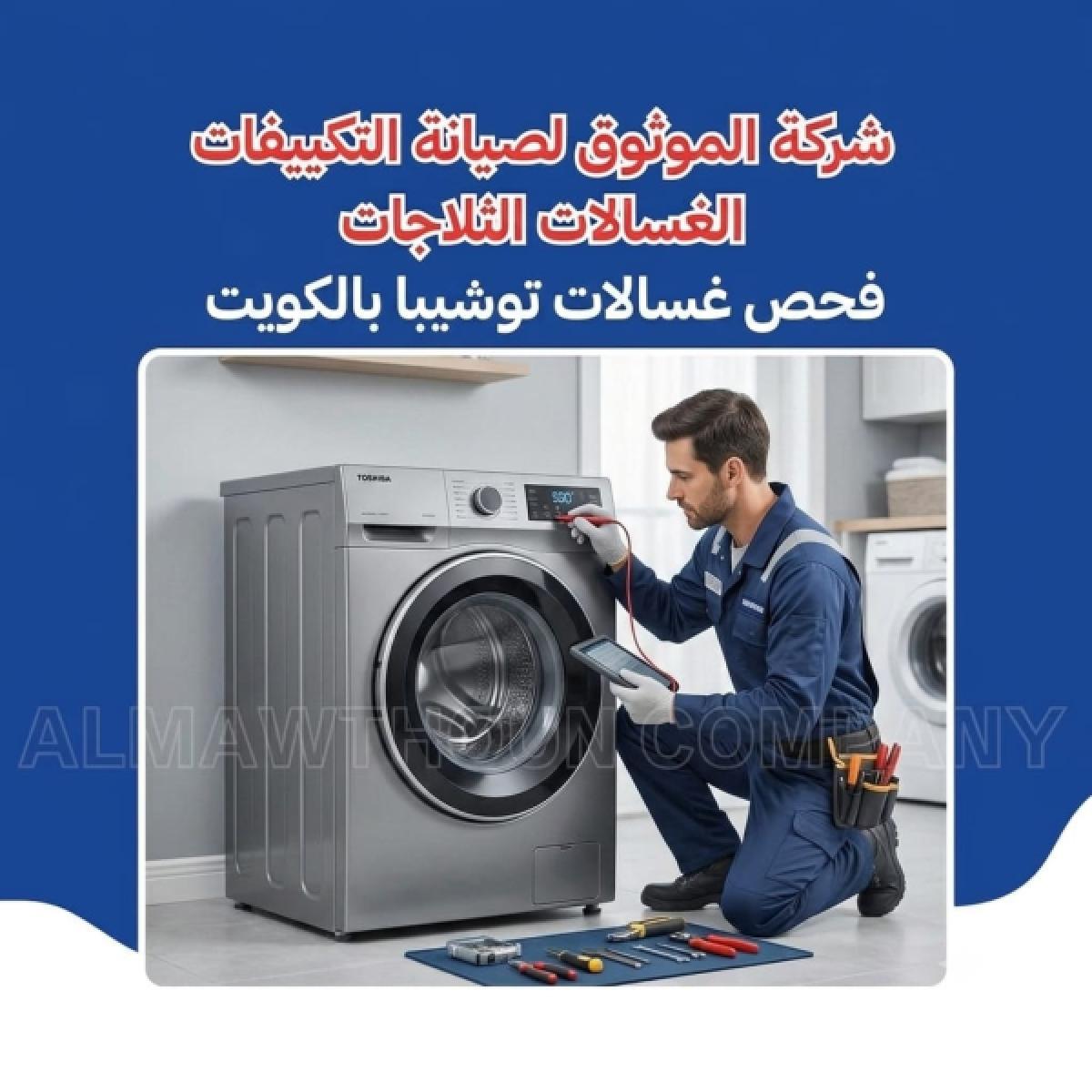
Toshiba Washing Machine Technician at Home
Using a Toshiba washing machine technician at home can be useful when the problem is connected to the way the washer is installed or only appears while the appliance is operating under its normal conditions. The water supply, drain hose, electrical connection, and stability of the washer on the floor can all affect diagnosis and should not be separated from the appliance itself.
An organized technician should begin by asking questions before dismantling anything. Does the washing machine reach the filling stage? Does water enter at a normal speed? Does the tub or drum begin moving afterward? Does drainage complete fully? Does the problem appear at the same point every time? Is there an error code or a new sound?
If the washer stops at the spin stage, drainage, load balance, and appliance stability should be reviewed before movement-related components are blamed. If the washer does not fill with water, the household supply and inlet hose should be checked first. If the appliance makes a loud noise, the type of sound and the stage where it appears should be identified before assuming the tub or motor is responsible.
Another advantage of in-home inspection is that the technician can observe the appliance under the same installation conditions. A washing machine that shakes because of an unstable floor may not show the same behavior after being moved elsewhere. A hose compressed behind the washer may also be the real cause of slow drainage.
A good technician should explain what was inspected and what the result was before recommending replacement of any component. If the service only requires clearing a path or correcting a position, that should be explained without unnecessarily expanding the repair.
After the repair, the exact stage that previously failed should be tested again rather than only switching on the machine and confirming that the display works.
• Inspecting the washer in the same location where it is normally used allows installation conditions that may be part of the fault to be reviewed properly
• Describing the problem in sequence from startup until the moment it stops helps the technician shorten the diagnostic process and begin with the function closest to the fault
• Avoiding changes to hoses or connections before the visit preserves the original condition where the problem appears and makes it easier to observe
• Repeating the same stage after repair provides practical confirmation that the cause has been corrected rather than relying only on a quick startup test
Repairing a Toshiba Top-Load Automatic Washing Machine
Repairing a Toshiba top-load automatic washing machine requires understanding that the lid, load distribution, water level, drainage, and tub movement are closely connected. A small problem in one of these areas can prevent the washer from moving to the next stage.
If the appliance does not start, the first step is to make sure the lid closes normally and that nothing is interfering with closure. If the washer starts and fills with water but the tub does not move, it is useful to notice whether there is an operating sound or whether the appliance is completely still.
Spinning is one of the stages most affected by how clothes are distributed. One large item or a group of clothes concentrated on one side can cause the machine to attempt to redistribute the weight several times or stop before reaching the required speed. Testing with a medium and evenly distributed load helps determine whether the problem is related to use.
Drainage is also extremely important because water remaining in the tub can prevent spinning. Users sometimes see that the washer will not spin and immediately think about the motor when the real issue is that the drainage stage never completed.
The lid system should not be bypassed or pressed forcefully. If the washing machine does not recognize proper lid closure, the cause should be diagnosed instead of trying to defeat an operating condition.
If the same fault continues with different loads and suitable programs while water supply and drainage are normal, professional inspection becomes the reasonable next step.
• Distributing laundry evenly in a top-load washer helps eliminate one of the most common usage-related causes before movement components are inspected
• Confirming that water has drained before spinning prevents the final-stage problem from being treated as separate from a fault that began during drainage
• Noticing whether the washer makes an attempt to move provides useful information that differs from complete lack of response
• Repeated failure with a normal load and stable operating conditions requires inspection instead of rearranging the laundry every time
Toshiba Washing Machine Does Not Work
If a Toshiba washing machine does not work, the first step is to determine whether the appliance has no electrical power at all or whether the indicators are on but the program will not start. This distinction matters because complete power loss has a different diagnostic path from a washer that refuses to begin a cycle.
If the display or indicators are completely off, the wall outlet, circuit breaker, and plug can be checked externally and safely. The appliance should not be opened and internal wiring should not be tested without a technician because internal electrical faults require proper handling.
If electrical power is present but the washing machine does not start, the door or lid, selected settings, and any visible code should be reviewed. Sometimes the appliance is simply waiting for an operating condition such as proper lid closure or water entry.
It is also important to notice whether the problem began after a power interruption, after the washing machine was moved, or after an unusual sound or smell. These details can change the diagnostic direction and should be mentioned before or during inspection.
Repeatedly pressing the power button or disconnecting and reconnecting the appliance every few minutes is not a useful solution. If basic checks do not change the behavior, repetition does not become a repair.
If the circuit breaker trips, the outlet becomes hot, or there is a burning smell, the washing machine should be stopped and not tested again until it has been inspected.
• Distinguishing between complete electrical loss and a powered washer that refuses to start creates a clear diagnostic starting point
• Reviewing the lid or door and selected settings eliminates simple operating causes before an internal electrical fault is assumed
• Mentioning any power interruption sound or smell that happened before the problem helps the technician connect the fault with a specific event if one exists
• Circuit breaker tripping or unusual heat at the outlet is a reason to stop using the washer instead of repeatedly attempting to start it
Toshiba Washing Machine Does Not Fill With Water
When a Toshiba washing machine does not fill with water, the first step should be checking the water supply itself before assuming anything is wrong inside the appliance. A closed supply or weak water pressure can delay filling or stop the program even when no internal fault exists.
The inlet hose should then be inspected externally to make sure it is not bent or compressed behind the appliance. Sometimes the washing machine is pushed backward or moved for cleaning and the hose becomes restricted without being visible from the front.
It is also important to notice whether the washer is trying to fill. Hearing an attempt to take in water with weak flow gives different information from a machine that makes no filling attempt at all.
If the model has an inlet filter designed for user access and the manual allows it to be checked, it can be reviewed using the approved method without dismantling the valve or any internal parts.
If the problem only appears at certain times, household water pressure may be contributing. If the water supply is normal, the hose is clear, and the washing machine still fails to fill every time, inspection should move toward the inlet system, sensors, or control functions depending on the design.
Replacing the inlet valve immediately without testing is a common mistake because the same symptom can come from several different causes.
• Confirming that the water supply is open and pressure is acceptable should come before treating failure to fill as an internal appliance fault
• Inspecting the inlet hose externally can reveal bending or compression that limits water flow without requiring any dismantling
• Hearing the washer attempt to fill helps distinguish weak water delivery from a filling system that is not being activated at all
• Continued failure to fill despite a normal supply and hose requires technical inspection instead of immediately replacing the inlet valve
Toshiba Washing Machine Does Not Drain Water
If a Toshiba washing machine does not drain water, water often remains inside the drum or tub, the program becomes delayed, or the washer fails to reach spinning. However, retained water does not automatically mean that the pump has failed because the problem may be in the hose or drainage path.
The first step is to inspect the external drain hose and make sure it is not bent, compressed, or repositioned after the washer was moved. The household drain point should also be clear.
It is important to notice whether the appliance is trying to remove the water. A running sound with no water leaving provides different diagnostic information from a washer that gives no response at all during drainage.
If the model has a user-accessible filter or drainage service area, it should be handled according to the instructions for that exact appliance. Care is important because retained water may come out quickly when the area is opened.
If the water is hot, the drainage area should not be opened carelessly. Safety is more important than emptying the washer quickly.
If the external drainage path is normal and the problem keeps returning, the technician should inspect the internal drainage system according to the model instead of starting another cycle with the same water still inside.
• Water remaining inside the tub confirms that drainage has not completed normally but does not identify the pump as the only possible cause
• Checking the hose and household drain point eliminates simple causes that can create the same symptom without an internal appliance fault
• Knowing whether the washing machine is attempting to drain provides important information that helps determine the next inspection direction
• Repeated drainage failure after the external path has been checked means the internal drainage components should now be evaluated
Toshiba Washing Machine Stops at the Spin Cycle

When a Toshiba washing machine stops at the spin cycle, it is important to know whether the washer actually entered spinning and then stopped or whether it was unable to move into the stage at all. This difference matters because the real problem may have started before spinning itself.
The first thing to confirm is whether all water has left the tub. If water remains inside, the washer may prevent spinning as part of normal operation. The load should then be reviewed to make sure the laundry is distributed properly.
If the load contains one large item or weight is concentrated on one side, the appliance may attempt to rebalance or stop. Testing with a medium and balanced load helps separate a balance problem from a fault that continues under normal conditions.
It is also useful to notice whether the washer makes a sound while attempting to spin and whether the tub begins moving before it stops. These details provide a technician with clearer information than simply saying that the washer stops at spin.
If the appliance shakes violently before stopping, stability and load balance become important parts of diagnosis. If the washer stops without vibration during every cycle, the inspection direction changes.
Repeatedly restarting the spin cycle with the same load is another mistake when the machine continues to stop in the same way.
• Complete water removal is an important condition before the spin stage can be evaluated because incomplete drainage may be the real reason for the stoppage
• Testing with a medium and balanced load helps show whether the appliance stops because of weight distribution or because of a consistent fault
• Noticing whether the tub begins spinning before the stoppage provides more accurate information than a general description that the washer stops at spin
• Repeated spin stoppage despite normal drainage and balanced loading requires focused inspection instead of restarting the same stage without addressing the cause
Toshiba Washing Machine Makes a Loud Noise
If a Toshiba washing machine makes a loud noise, the most useful information is when the sound appears and what it sounds like because filling noise is different from tub movement noise and spin noise has a different diagnostic meaning again.
If the sound appears only at high speed, the load and appliance stability should be reviewed first. One heavy item or clothes collected on one side can cause obvious knocking and vibration. An unstable foot can also allow the appliance body to move and amplify the noise.
The type of sound matters as well. Repeated knocking is different from rubbing, humming, or whistling. The description alone cannot identify the failed component, but it helps determine where inspection should begin.
If the washer was recently moved and the noise started afterward, that detail is important because the level or installation may have changed. If the noise began gradually and has become louder over time, that provides a different picture.
Running many more cycles just to see whether the sound disappears is not a good idea. If the noise is new, strong, or combined with abnormal movement or rubbing, it is better to stop using the appliance until it has been inspected.
• Identifying whether the sound appears during washing drainage or spinning connects it to a specific stage instead of treating every noise in the same way
• Testing with a balanced load on a stable surface helps eliminate vibration caused by loading conditions before a mechanical fault is assumed
• Describing the sound as knocking rubbing or humming gives the technician useful information even though the sound alone does not identify the component
• A noise that increases quickly or appears with abnormal movement requires inspection instead of continuing normal washer use and waiting for it to disappear
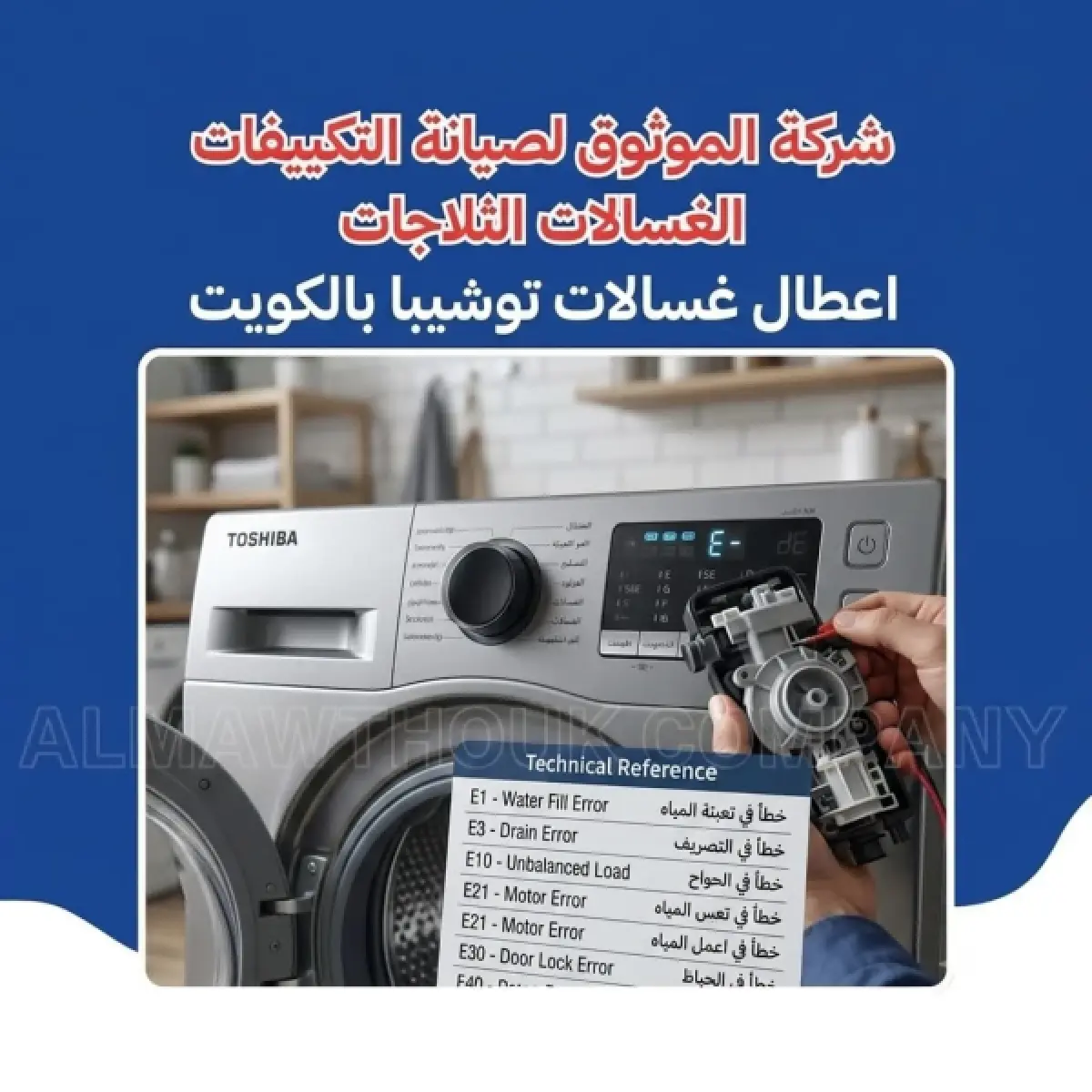
Toshiba Washing Machine Error Codes

Toshiba washing machine error codes are designed to help indicate that a certain function did not complete as expected, but they are not a final diagnosis of a specific failed part. The meaning of the code should always be connected to the exact model and the stage where it appeared.
The first step when a code appears is to photograph it before changing the program or switching off the washing machine. Then record what the appliance was doing at the time. Was it filling with water, draining, or entering the spin stage?
It is important to check the manual for the exact model because codes can differ between top-load and front-load washers and between different designs. A code from another model should not be used as the basis for a repair decision.
If the code appears once after an unbalanced load or temporary condition and disappears after the cause is corrected, the issue may have been temporary. If it returns at the same stage every time, broader evaluation becomes appropriate.
A common mistake is making code removal the main objective rather than correcting the cause. A code disappearing from the display does not mean the problem is solved if the same function still does not work normally.
A technician should use the code as a starting point and then test the related system rather than replacing a component simply because a message appeared.
• Photographing the code when it appears preserves information that may disappear after restarting and can be extremely useful during diagnosis
• Connecting the code with the stage where it appeared gives it more accurate meaning than reading the message separately from washer behavior
• Checking the manual for the exact Toshiba model reduces the risk of applying an incorrect interpretation from a different appliance
• The same code returning at the same stage after simple causes have been eliminated means the washer needs inspection rather than another restart
Booking a Toshiba Washing Machine Technician
Before booking a Toshiba washing machine technician, collect information that gives the visit a clear starting point instead of relying on a general description. The most useful details are the washer type, the model number if it is easily visible, and the stage where the problem appears.
If the washer does not fill with water, explain whether there is any filling attempt. If it does not drain, mention whether all the water remains or only part of it. If it stops during spinning, explain whether drainage completed and whether the load was normal. If the sound is loud, identify which stage produces it.
A photograph of any error code is especially useful if the message disappears after the appliance is switched off. If the problem began after moving the washing machine, changing a hose, or a power interruption, that should also be mentioned.
From a cost perspective, ask what the visit fee includes and whether diagnosis is separate from any replacement part or repair. The final repair cost cannot be determined accurately from the symptom alone because two appliances can show the same visible problem for different reasons.
During the visit, the technician should diagnose first and explain the result before carrying out a major repair. If a part is recommended for replacement, ask what was tested and why that component was connected to the problem.
After the repair, the exact stage that previously failed should be tested again to confirm that the service corrected the cause rather than only allowing the appliance to start.
• Preparing the washer type model number and a clear description of the stage where the program fails provides a more accurate diagnostic starting point than simply saying the washing machine is broken
• Keeping a photograph of the error code helps document the problem even if the message disappears before the technician arrives
• Explaining whether water enters and drains fully helps connect spin or stoppage problems to the stages that come before them
• Testing the same function after repair confirms that the washer successfully passes the point where it previously failed
Conclusion
Diagnosing Toshiba washing machine faults is more accurate when the full cycle is followed from the beginning instead of jumping directly to the name of a component. Toshiba washing machine maintenance in Kuwait depends on knowing whether the appliance starts normally, whether water enters and drains, whether the tub moves, and whether the stoppage happens during spinning or another stage. If the washing machine does not work, does not fill, does not drain, stops at spin, or begins making an unusually loud noise, reviewing simple external causes should come first, followed by technical inspection if the problem continues. Booking a technician becomes more useful when you already have a clear description of the fault, the model number, and a photograph of any error code because the goal is not to replace a part quickly but to identify the cause and carry out a repair that matches the actual problem.
Frequently Asked Questions
Why does my Toshiba washing machine not start?
The cause may involve electricity, the door or lid, selected settings, an operating condition that has not been completed, or an internal fault. The first step is to determine whether the appliance has completely lost power or still shows active indicators.
Why does my Toshiba washing machine not fill with water?
The household water supply may be weak, the inlet hose may be bent, or the filling system may have a fault, so diagnosis should begin with the external water source before internal parts are considered.
Why does my Toshiba washing machine not drain water?
The drain hose may be compressed, the external path may be blocked, or an internal drainage component may need inspection. Water remaining inside does not automatically mean that the pump has failed.
Why does my Toshiba washing machine stop during the spin cycle?
Incomplete drainage, an unbalanced load, or a movement-system problem are all possible causes, so water removal and laundry distribution should be checked first.
Does failure to spin mean the motor is faulty?
Not necessarily. The washing machine can prevent spinning because of retained water or imbalance even when the movement system itself is functioning normally.
Why does my Toshiba washing machine make a loud noise?
The cause may involve the load, appliance stability, or a movement-related problem depending on when the sound appears and what type of sound it is.
Does every loud noise mean I should stop the washing machine?
If the sound is new, severe, or combined with rubbing or abnormal movement, it is better to stop using the appliance until it is inspected.
Does an error code identify the exact faulty component?
No. An error code provides direction toward the problem but must be interpreted according to the exact model and operating stage and then confirmed through inspection.
Can I clear a Toshiba error code and continue washing?
If the cause was temporary and has been corrected, the washer may return to normal. If the code returns, the underlying problem is still present and needs diagnosis.
When should I call a technician for a Toshiba top-load washing machine?
If the same problem continues despite a suitable load, normal drainage, and proper lid closure, professional inspection is appropriate.
Can I know the repair price before inspection?
You may be able to know the visit fee or the general scope of a particular service, but the final repair price depends on the actual cause and the part or work required after diagnosis.
Is in-home inspection suitable for Toshiba washing machines?
Yes. It allows the appliance to be checked together with its water supply, drainage, electricity, and floor conditions under the same environment where it is normally used.
What should I prepare before booking a technician?
Prepare the washer type, model number if available, and a photograph of any error code. Also note whether water enters and drains normally and whether the problem appears during spinning or another stage.
When should I stop using the washing machine immediately?
Stop using the appliance if there is a burning smell, electrical tripping, unusual heat at the outlet, water leaking near electricity, or a strong rubbing sound until the washer has been inspected.