Samsung Washer Error Codes: When Do You Need a Technician
When an error code suddenly appears on a Samsung washing machine display, the first question is usually simple: what does this code mean, and can I fix the problem myself or do I need a technician? The important thing to understand is that an error code does not always identify the faulty component directly. In most cases, it points to a function that did not complete as expected, such as water intake, drainage, load balancing, or another operating stage. That is why the correct way to deal with Samsung washing machine error codes starts with understanding the code and observing what the washer was doing before it appeared, rather than disconnecting the power repeatedly or buying a replacement part based on the first search result you find. In this guide, we explain how to interpret Samsung washer codes practically, when the problem may be simple, and when professional inspection becomes the more reasonable decision.
Samsung Washing Machine Error Codes
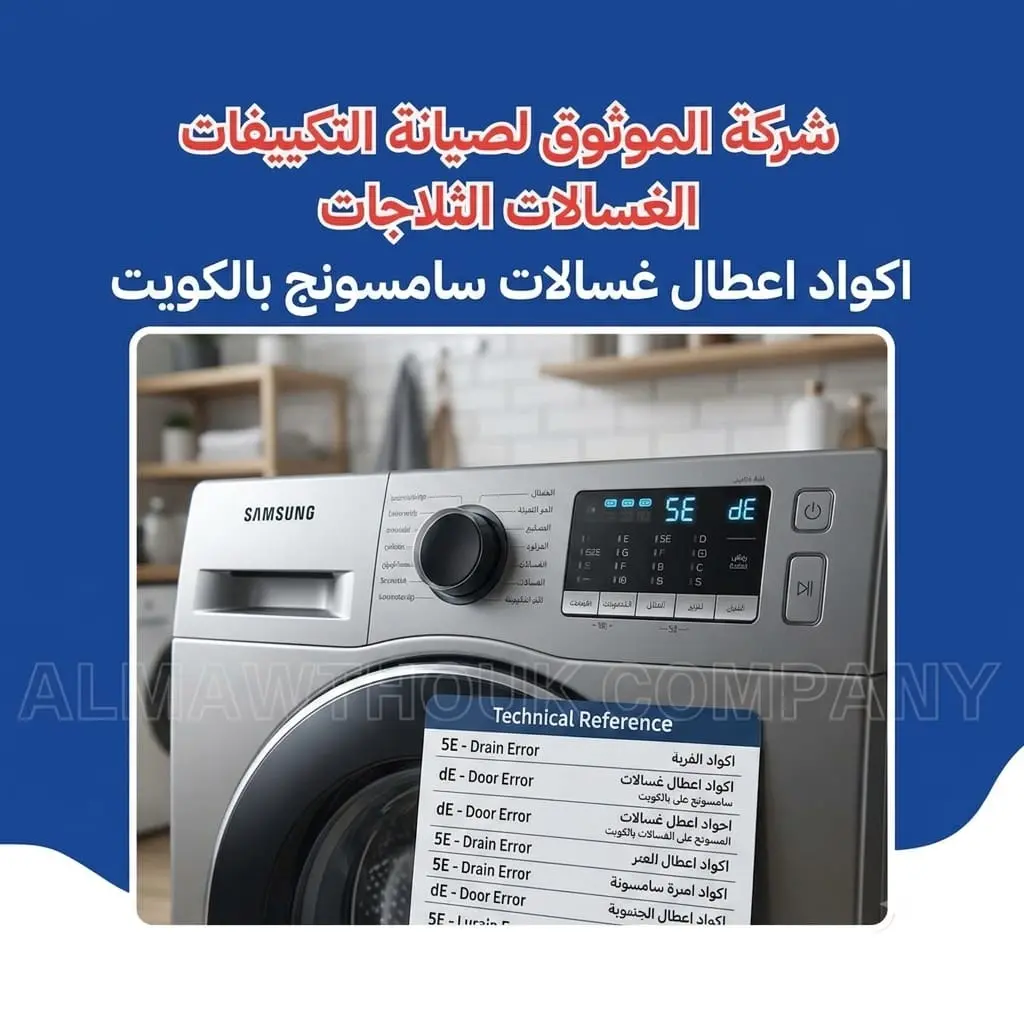
Understanding Samsung washing machine error codes requires treating the code as the beginning of the diagnostic process rather than a final judgment about a specific component inside the appliance. Modern control systems in many Samsung washer models monitor important operating stages such as water intake, drainage, load balance, door or lid status, and drum movement. If one of these stages does not complete within the conditions expected by the machine, the washer may display a code or warning that helps identify the general area of the problem. However, the exact form of the code can vary between models, production generations, and markets, and sometimes the same category of fault may appear differently depending on the design of the control panel. For that reason, relying on a code explanation from another Samsung model without confirming your own model can send the diagnosis in the wrong direction from the beginning.
The most practical approach is to record the code exactly as it appears, take a photo of the display, and note the exact point in the program when it appeared. If the code appears before water enters the washer, that information is very different from a warning that appears after the drum fills or when the cycle moves toward spinning. You should also notice whether the problem happened once and disappeared after correcting the load or checking a hose, or whether the same code returns during every cycle. This difference matters because some codes can be triggered by temporary operating conditions such as an unbalanced load, while a code that repeatedly appears at the same stage usually suggests that a fixed underlying cause needs closer inspection.
From a safety and cost perspective, the code is most useful when it guides the inspection instead of being treated as an instruction to replace a part. A specialist technician combines the code with the actual symptoms and then tests the function connected to it. If the code points toward drainage, for example, the technician should inspect water flow and the drainage system response before blaming a specific component. This approach reduces unnecessary replacement because the washer is not literally telling you, “Buy a new pump now.” It is simply saying that something in this operating area needs attention.
-
Take a photo of the code as soon as it appears and record the program and stage where the washer stopped because connecting the code with the exact timing provides much greater diagnostic value than the code alone
-
Do not rely on a general explanation taken from another Samsung model without checking the information for your exact washer because code format and detailed meaning can vary between product series
-
If the code disappears after correcting the load or adjusting a hose and the washer continues operating normally monitor the appliance rather than immediately assuming that a major internal fault exists
-
If the same code keeps returning at the same stage despite checking the basic user-level causes professional inspection becomes reasonable because repeated behavior usually points to a persistent cause rather than a temporary condition
Samsung Washing Machine Error Symbols
Dealing with Samsung washing machine error symbols becomes much easier when you group them according to the function the washer was trying to perform instead of trying to memorize a long list of letters and numbers like you are preparing for an exam. Some codes are related to water intake, others to drainage, others to load balance, while additional warnings may involve the door, lid, temperature, or particular operating systems depending on the model. The main idea is that an error symbol usually means the control system detected that one stage did not proceed as expected. This is where observation becomes extremely useful. Did water fail to enter? Did water remain inside the drum? Did the washer repeatedly attempt to redistribute the clothes? Did the door fail to lock? When a visible symptom matches the code category, the diagnostic picture becomes much clearer than relying on the code alone.
If a water-related code appears, for example, the first step is not opening the washer or ordering a part. You should first confirm the water source, supply tap, pressure, and hose position according to the situation. If the warning relates to drainage, check the user-accessible items allowed by the model instructions, such as the visible drain hose or drain filter if the washer is designed for user access. With imbalance codes, redistributing the laundry or correcting an unsuitable load may solve the issue without any repair at all. The key difference is asking, “Which function failed?” before asking, “Which part should I replace?”
You should also remember that some error symbols disappear after restarting the machine, but their disappearance does not automatically mean the original cause has disappeared. If the washer runs for ten minutes and then the same warning returns, the condition still needs attention. On the other hand, if the code appeared once because of a clear temporary situation, that situation was corrected, and the code never returned, the warning may simply have done its job. The real value of the error symbol is that it narrows the direction of inspection. It does not replace diagnosis itself.
-
Group the code according to the operating function that was active when it appeared because knowing whether the problem involves filling drainage or spinning immediately removes many unrelated possibilities
-
Observe the real symptom that appears with the warning such as water remaining inside the washer drum stopping or the program refusing to begin because the code becomes more useful when it matches a clear operating condition
-
Perform only simple and safe user-level steps recommended for your model and do not start dismantling internal parts simply because you understand the general category of the error
-
If the warning disappears and then returns repeatedly under the same conditions do not treat restarting as a permanent solution because repeated codes usually mean the underlying cause is still present and needs diagnosis
Meaning of a Samsung Washing Machine Error Code
When you search for the meaning of a Samsung washing machine error code, the most important thing to understand is that the code has two levels of meaning. The first is a general meaning that identifies the operating function where a problem was detected, while the second is a more precise diagnostic meaning that requires the code to be connected with the exact model and actual symptoms. For example, a drainage-related code may mean the washer was unable to reduce the water level within the expected period, but it does not automatically mean the drain pump has failed. The cause may be a bent hose, a blockage, a problem with system operation, or another issue somewhere in the drainage path. The same applies to a water intake warning. The problem may begin with household water pressure or the supply connection before any internal washer component is involved. Understanding this difference prevents you from turning “the meaning of the code” into “the name of the part I need to buy.”
The best way to understand the warning is to begin with the user information for the exact washer model and then compare the explanation with what actually happened during the cycle. If the code points toward load balance, review the type of laundry and whether one heavy item is dominating the load. If the code is related to water, observe whether water does not enter at all or only enters slowly. If the warning involves the door, check whether the door closes normally and whether the cycle begins. These details help determine whether the next step is something simple you can safely review yourself or whether the problem requires technical testing and proper tools.
The meaning of the code also becomes more useful when you consider whether the problem is occasional or persistent. A balance warning that appeared once while washing one large blanket and disappeared after redistributing the load is very different from a code that returns every day with ordinary clothing. If several different codes begin appearing, or the warnings change while the washer also shows different symptoms, it may be better to inspect the machine as one connected system instead of treating each code separately. The screen is giving you a direction, not a complete forensic report.
-
Start by interpreting the code according to the exact washer model because the same general code family may have different details across different Samsung product series
-
Connect the meaning of the code with the real operating symptom instead of relying only on written explanations because a drainage code should be compared with whether water actually remains inside the drum
-
Do not turn a code explanation directly into a replacement-part decision because one operating function can fail for several reasons and some of them may be external or simple
-
If several different codes appear repeatedly or the same warning returns without a clear usage-related reason it is better to inspect the washer as a complete system rather than trying a different isolated solution each time
How to Solve an Error Code on a Samsung Washer
When looking for a solution to an error code on a Samsung washer, the most important thing is not to treat every code the same way. The correct solution depends on the function connected to the warning and on the actual reason the washer displayed it. Some codes may be caused by simple operating conditions such as an unbalanced load, a bent hose, or a water source that is partially closed. These situations can often be reviewed through safe, straightforward steps recommended for the specific model. Other codes return immediately after every cycle or appear together with stronger symptoms such as a stationary drum, water remaining inside the washer, or an unusual smell. In those cases, restarting the appliance is not a repair. One common mistake is seeing a video or comment that says to unplug the washer for several minutes, doing that, seeing the machine work temporarily, and assuming the problem is solved. Then the code returns later as if it had simply taken a short break.
The better approach is to record the code and observe the condition of the washer when it appears, then perform only the simple checks connected to that type of warning. If the issue is related to water, check the source and hose. If it is a balance problem, review the load. If it is a drainage warning, check the user-accessible items permitted by the model instructions. After each correction, perform a reasonable test rather than repeatedly running full cycles. If the code disappears and normal operation continues, monitor the washer. If the same warning returns at the same stage, stop relying on quick fixes and move toward technical diagnosis.
You should also remember that clearing a code is not the same as solving the fault. Disconnecting the power may remove the warning from the display, but the internal or external cause may remain exactly where it was. The real solution is correcting the condition that made the control system register the error in the first place. A specialist technician should not simply make the code disappear. They should test the function connected to the warning and confirm that the washer now completes that stage normally.
-
Treat the disappearance of a code after restarting as a test result rather than final proof of repair because the warning may return as soon as the washer reaches the same operating stage again
-
Perform only the simple checks connected to the specific error category such as reviewing the load hose or water supply and avoid dismantling internal components without a confirmed reason
-
If the same warning returns immediately after basic user-level checks stop repeating the same attempts and arrange an inspection because repeated restarts will not remove the original cause
-
After any repair the exact function that previously triggered the code should be tested and the washer should complete that stage normally because general operation alone does not prove that the fault has been solved
Samsung Washing Machine Drainage Error Code
A Samsung washing machine drainage error code usually means the washer detected that the water level did not fall as expected during the drainage stage, but this does not automatically mean the pump has failed. The cause may be a drain hose that is bent, compressed, or restricted, a blockage somewhere along the drainage path, water moving too slowly, or a deeper problem that needs technical inspection. This is where the code becomes useful because it directs attention toward the drainage system, but it does not provide a death certificate for the pump the moment it appears. At home, one of the first things you should observe is whether water is actually remaining inside the drum or tub and whether you can hear the washer attempting to drain. A washer that produces drainage sound while water remains inside presents a different diagnostic situation from a washer that produces no drainage response at all.
If the model includes a user-accessible drain filter, it may be checked according to the safe procedure described in the washer instructions, with the machine disconnected from electricity and preparations made for water to come out. The drain hose behind the washer should also be checked for bending, crushing, or an incorrect position. If the problem started after the appliance was moved, the hose installation becomes an especially important place to start before assuming an internal component fault. If all visible items appear normal and the code keeps returning, professional inspection becomes reasonable because the technician needs to determine whether the problem is in the drainage path, the component moving the water, or another part of the control process.
One common mistake is repeatedly selecting a spin program while water remains inside the machine and hoping the washer will eventually correct itself. If drainage has not completed, the washer may refuse to enter normal spinning, making it look as if there are two separate faults instead of one. Correcting the drainage problem first prevents misdiagnosis and helps confirm whether the spin complaint was simply a result of the original drainage issue. In this situation, the code is useful because it identifies the stage that failed instead of blaming the whole appliance.
-
Check whether water is still present when the code appears because actual water remaining inside the washer strongly supports the conclusion that the drainage stage has not completed normally
-
Review the drain hose and any user-accessible filter before considering replacement of internal parts because blockage or hose restriction should be ruled out first
-
If you hear the washer attempting to drain but the water level does not decrease this is an important clue for the technician and differs from a situation where there is no drainage response at all
-
Do not repeatedly run the spin program while the washer still contains water because incomplete drainage can prevent spinning and make one original problem look like two separate faults
Samsung Washer Water Problem Error Symbol
When a Samsung washer water problem error symbol appears, you need to distinguish between two main conditions: no water enters the washer at all, or water enters much more slowly than expected. The difference is important because the first situation may be related to the water source being shut off, the supply being interrupted, or the washer not activating the intake system correctly. The second may point toward low pressure, partial restriction, a compressed hose, or an inlet filter that needs attention depending on the model design. That is why the first step is not opening the washer or assuming the inlet valve has failed. The first step is confirming that the home water supply itself is not the one creating the problem.
Start with the water source. Is the supply tap fully open? Is the pressure normal? Is the hose bent or trapped? If the problem appeared after cleaning behind the washer or moving it slightly, check the hose connections first because a change in position can restrict water flow. Then observe whether the washer attempts to take in water and whether you hear the normal filling sound. If water enters but does so very slowly, that reduced flow can make the program take much longer and may eventually trigger a warning because the washer did not reach the expected water level within the allowed time.
On some models, the warning may also be related to a particular stage or inlet path, which is why checking model-specific information is important instead of relying on a general explanation. If the household water supply, pressure, and hose position are all normal but the error continues to appear, a technician may need to inspect the internal intake path and the response of the related components. A water-related code identifies the function that failed. It does not automatically identify which part caused the failure.
-
Confirm normal water pressure and make sure the supply tap is completely open before arranging an internal repair because a weak external water source can trigger the same warning even when the washer components are healthy
-
Check the inlet hose carefully especially if the washer was recently moved because bending or compression behind the appliance can noticeably reduce water flow without any internal defect
-
Distinguish between no water entering and water entering slowly because slow intake may indicate a partial restriction rather than complete failure of the water system
-
If the warning continues despite normal water supply pressure and hose position professional inspection becomes necessary to determine whether the problem is in the intake path electrical response or another component involved in filling
Samsung Washing Machine Unbalanced Load Code
A Samsung washing machine unbalanced load code is one of the warnings that is often related to laundry distribution rather than an actual component failure. During the spin stage, the washer attempts to distribute clothing inside the drum or tub so it can rotate at high speed without excessive vibration. If the weight is concentrated heavily on one side, the machine may reduce speed, try to redistribute the load, stop temporarily, or display a warning. This often happens with one large blanket, a heavy towel, or a very small number of items that have become tangled together. In these situations, redistributing the clothes or adjusting the amount of laundry may solve the issue without any repair.
However, if the imbalance code appears with normal medium-sized loads and across different programs, it is no longer reasonable to blame the laundry every single time. The washer itself may not be level, the floor may be unstable, or a change in the support and movement system may cause the control system to detect excessive vibration. The difference between an occasional code and a repeated code is therefore very important. A warning that appears once with a heavy blanket is not the same as a warning that appears every day with ordinary shirts and light clothing. Repetition increases the likelihood that an installation or technical issue needs to be checked.
It is also better not to respond by randomly adding more laundry, pressing against the appliance, or using improvised supports. The goal is to identify whether the cause is the load, the installation, or the washer itself. If the warning keeps returning, a specialist should check that the appliance is level, confirm stability, observe drum or tub movement, and inspect the support system before recommending replacement of any part. This is one of those codes where context makes all the difference. Sometimes the machine is simply telling you to redistribute the clothes, and sometimes it is asking for a closer inspection.
-
If the code appears while washing one large heavy item redistribute the laundry and test the washer with an appropriate balanced load before requesting repair because occasional imbalance can happen without a technical fault
-
Make sure the washer is stable and level on the floor because poor leveling can make the imbalance warning return even when the laundry itself is reasonably distributed
-
If the warning appears with ordinary medium loads across several programs it is better to inspect support and movement components instead of blaming clothing distribution every time
-
Do not use improvised supports or physically press against the washer during spinning because temporarily hiding vibration does not correct the cause if the problem comes from installation or an internal component
Diagnosing Samsung Error Codes
Proper diagnosis of Samsung error codes is not about memorizing codes. It is about connecting the warning with the actual behavior of the washer, the stage where the code appeared, and the conditions that existed before it happened. The code gives direction, but diagnosis requires three elements together: the code itself, the visible symptom, and testing of the related function. For example, if a drainage code appears but the washer is already empty and no water remains inside, the technician may need to consider whether the issue involves sensing or another part of the operating sequence instead of immediately focusing on the drain pump. If an imbalance code appears but the washer vibrates even with a very light load, then appliance stability and movement should be investigated instead of blaming the clothes alone. This approach separates the apparent symptom from the actual cause.
A good technician asks specific questions before dismantling anything. When did the code appear? How many minutes into the program? Did it return after restarting? Was there leakage, unusual noise, or a power interruption before the problem began? Does the warning appear on every program? After gathering this information, the technician tests the function related to the code. This sequence saves time and reduces unnecessary replacement of healthy components. Knowing the exact washer model is also important because error-code format and meaning can vary between product lines. A short code on one model may be displayed as a different format or full message on another.
From a cost perspective, accurate diagnosis is what prevents random repair. Instead of paying for two or three parts because a code “sounds similar” to something else, the real cause can be identified and the required repair cost explained before work begins. If the solution is something simple such as adjustment or cleaning of a user-serviceable path, the visit should not turn into unnecessary component replacement. Professional diagnosis is valuable because it explains why the code appeared, why it keeps returning, and what solution actually addresses the cause rather than simply reciting a list of code definitions.
-
Connect the code with the actual symptom and the stage where operation stopped because diagnosis without context can lead toward a component that is not directly responsible for the problem
-
Confirm the exact washer model when interpreting the error because code format and detailed meaning can differ between Samsung series and generations
-
Ask the technician what test confirmed the cause after reading the code because the warning is an indicator and is not enough by itself to prove that one specific part is defective
-
If several codes appear one after another it is better to inspect the washer as one connected system because treating each warning separately can hide the relationship between the underlying faults
Repeated Error Code on a Samsung Washing Machine
Repeated appearance of an error code on a Samsung washing machine is the point where you need to distinguish between a temporary warning and a persistent problem. If the code appeared once because the load was clearly unbalanced, disappeared after the clothes were redistributed, and never came back, the issue was probably related to that specific operating condition. But if the same warning appears every day, on every program, or at almost the same minute during each cycle, the repetition itself becomes important diagnostic information. It suggests that one function is failing consistently or that the original cause was never actually corrected. Disconnecting the power may remove the code temporarily, but if it returns in exactly the same way, the washer does not need another reset. It needs the cause to be identified.
You should also notice whether the warning is becoming more frequent or appears earlier than it used to. Perhaps it originally appeared after an hour of operation but now shows after ten minutes, or it used to happen once a week and now happens during every cycle. A change in frequency can indicate that the condition is developing, which is another reason not to keep postponing inspection. If the repeated code is accompanied by a more serious symptom such as leakage, a burning smell, or severe noise, you should not wait for the code to appear again. Stop the washer and treat the situation as something that requires direct inspection.
When contacting a technician, explain how often the warning appears and approximately when in the cycle it returns, and provide a photo of the display if possible. This pattern is often more useful than the code name alone because it shows how the fault behaves over time. If the washer has already been repaired for the same code and the warning returned shortly afterward, mention the previous work clearly. The original cause may not have been completely corrected, or another related factor may still be present. Repetition is not only annoying. It is evidence that the quick solution was not enough.
-
Record how many times the code appears and the exact stage where it returns because the repetition pattern helps separate a temporary operating condition from a persistent fault
-
If the code begins appearing earlier than before or starts showing during every cycle treat that as a developing problem and do not postpone inspection simply because the washer still operates for part of the program
-
If repair was previously carried out for the same warning and the code returned soon afterward tell the technician what work was done because that information may reveal that the original cause was not fully corrected
-
Do not continue restarting the washer if the repeated code is accompanied by leakage an unusual smell or severe noise because the associated symptoms matter more than whether the appliance can complete one more cycle
Technician for Samsung Washing Machine Error Code Inspection
Requesting a technician for Samsung washing machine error code inspection becomes reasonable when the warning continues after basic checks or when the code is connected with a symptom that should not be left to repeated experimentation, such as complete stopping, leakage, drainage failure, or an unusual smell. A specialist technician should not simply arrive and read the code from the screen because you can already see that yourself. The real value of the technician is identifying why the warning appeared, testing the related function, and determining whether the cause comes from usage, installation, or an internal component. If the warning involves drainage, the technician should inspect drainage. If it concerns water intake, the water supply and intake system should be tested. If it is a balance warning, the load, stability, and movement system should be reviewed. That is the difference between someone who only reads codes and someone who actually diagnoses the washer.
Before booking, prepare the washer model number, a photo of the code, and a description of when it appears and whether it returns during the same program. If there is unusual sound, leakage, or water left inside the drum, mention that as well. These details reduce diagnostic time and help make the visit more focused. From a cost perspective, ask about the inspection charge and how the repair price will be determined before any component is changed. It is not enough for someone to say that a particular code means a specific part must be replaced without testing, especially when that part is expensive.
After the inspection, the technician should explain the cause in clear language and tell you what was tested and what repair is being recommended. If repair is carried out, the washer should then be returned to normal operation and the exact cycle stage connected to the warning should be tested to confirm that the code does not return. The code on the screen is not the only issue. The important point is that the function behind the warning works normally again. The goal is not to fix the display while the washing machine remains unhappy internally.
-
Prepare a clear photo of the error code the exact model number and a description of the stage where the warning appears because this information allows the technician to begin the diagnostic process much closer to the real cause
-
Choose a technician who tests the function connected to the warning rather than relying only on memorized code meanings because professional diagnosis should confirm the cause before any part is replaced
-
Ask about the inspection charge and expected repair cost after diagnosis because the code alone is not enough to determine a reliable price or replacement component before the real cause is known
-
After repair the exact stage that previously triggered the warning should be tested and the washer should complete it normally because simply removing the code from the display does not prove that the service was successful
Conclusion
Dealing with Samsung washing machine error codes requires understanding that the warning is a diagnostic aid rather than a final judgment about one particular component. A drainage code may begin with a hose, blockage, or a deeper drainage problem. A water-related warning may be caused by the household supply before any internal washer part. An imbalance code may be nothing more than poorly distributed laundry, or it may become a sign of an installation or movement problem if it repeatedly appears during normal use. That is why the first steps should be recording the warning, checking the exact washer model information, observing the program stage where the code appeared, and performing only the simple and safe user-level checks connected to that type of error.
If the code keeps returning, or appears together with leakage, an unusual smell, severe noise, or complete stopping, calling a technician is usually safer and more economical than repeatedly restarting the washer. Accurate diagnosis can save the cost of replacing good components and helps identify the actual cause before money is spent on repair. The goal is not simply to clear the code from the screen. The goal is to restore the function that caused the warning so the washer can complete its cycles normally and the same error does not keep returning under the same conditions.
Frequently Asked Questions
Does every Samsung washing machine error code mean a part is damaged?
No. Some codes appear because of operating conditions such as an unbalanced load, weak household water pressure, or a drain or inlet hose that is positioned incorrectly. The code identifies a function that did not complete as expected, but determining whether a component is actually damaged requires connecting the warning with the visible symptoms and performing proper inspection.
Does unplugging the washer clear the error code and solve the problem?
Disconnecting the power may temporarily remove some warnings from the display, but it is not a repair if the original cause is still present. If the same code returns when the washer reaches the same stage again, the related function needs diagnosis instead of repeatedly disconnecting and reconnecting the appliance.
When can I deal with a washer error code myself?
If the warning is connected to a simple and clearly described user-level step in the instructions for your exact model, such as redistributing the load, checking the household water source, or reviewing the position of a visible hose, you can begin with those basic checks. If the situation requires dismantling internal parts or the warning continues after the basic checks, it is better to stop and call a technician.
Why does the same error code return after the washer works for a while?
The repeated code usually means that the original cause has not been completely corrected or that the fault is intermittent and appears only when the washer reaches certain operating conditions. Record when the warning returns and whether it is linked to a particular cycle or stage because this information can make diagnosis much more accurate.
When does a Samsung error code require professional inspection?
Professional inspection becomes the better option when the warning appears across several cycles, returns after basic checks, or is accompanied by leakage, severe noise, drainage failure, an unusual smell, or complete stopping. A qualified technician should identify the reason the code appears and test the related function rather than simply reading the warning and replacing a part based on guesswork.